So I think I should get this out of the way first: John Green, the person, is awesome. He's hilarious and clever and incredibly quotable especially in the departments of "being a nerd" and "relationships." I have seen every episode of
Crash Course: World History and a rather notable share of his vlogbrothers videos (as well as many by his brother, Hank Green). Hell, one time I even sat my mom down and made her watch his "
How To Make A Baby" video and I never share anything with her. Plus, there's the fact that he's a Christian humanist which, as a secular humanist myself, fills me with joy whenever I find religious people who are also humanists.
So yeah, I think John Green, the person, is pretty awesome. I'd still never approach him on the street but I'm a colossal bag of awkward so that's more a comment on me than anything (one day ask me about all the famous people I have encountered in New York and had absolutely no balls to talk to). And as a fan of John Green, the person, I made it my mission to read his books. Yes, that noun was always plural.
So I ventured to the library and, as my usual frustration with my town's library goes, I was unable to procure
Looking for Alaska, John's first young adult novel. Luckily, the day was not a failure as I did manage to find
Paper Towns. The second I got home at around seven, I started reading and I was finished in the evening the next day. I thought it was really a fantastic read: very smart, likeable and interesting characters, a writing style that sounds like John Green talking, and a plot that kept me turning the pages with no effort. When I finished, I went onto goodreads.com, as I do, rated it, and read reviews. The positive reviews were mostly people talking about how awesome John Green, the writer and person, is so I ignored them. As it goes, the negative reviews were much more interesting. Most of them complained about the characters being too much like his other characters which, since this was the first book I had read by him, I didn't fully understand but it made me wonder what was in store for me the next time.
The library was kind to me and I managed to find
Looking for Alaska the next time I tried. It took me a bit longer to read, maybe four days off and on, and when I finished I was conflicted. Like, "My feels!" conflicted. Yes, it's a sad book but it wasn't the sadness that pained me. What pained me was the fact that A.) I could see exactly what those reviewers were saying about the characters being too similar but B.) I HATED these characters so much in direct contrast with how I felt about the characters in
Paper Towns but C.) I understood that I wasn't supposed to necessarily like them. And yet, and here's where the problem comes in: I really felt that it was the stronger book from a thematic and plot-based standpoint. The only thing I wasn't conflicted about was that the book had the funniest blow job scene I have ever read and probably will ever read and at least that cannot be taken from me (I photocopied it and read it aloud to my friends with voices; I can't do a Romanian accent at all). My hatred of the characters for being both unoriginal and unlikeable deeply conflicted with my feelings on theme and plot and as a book person myself, I eventually had to admit to myself that
Alaska was far superior.
Next came
Will Grayson, Will Grayson which I thought was okay but had a lot of faults, particularly in John Green's half of it, most notably those same character types appearing again and a romance that kind of distracted from what the book really seemed to want to say.
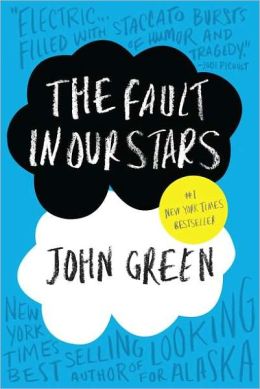
I just finished
The Fault in Our Stars and I have to say I feel a little better about John Green, the author (the book, on the contrary, made me sob during my lunch break in a good way). It had a lot of the same things to complain about as before but it did feel fresher and newer than the others and for that I have hope.
If you're wondering why I haven't read
An Abundance of Katherines, I have been unable to find it in the library. If you're wondering why I don't just buy it since I seem more on the plus side than the negative with John Green's books, it's because I can tell from the plot synopsis that even if it is good (which reviews don't seem to tell me), it's unlikely that I will like it more than
Alaska or
Stars. I like the tragic. It's how I roll.
But here's my main point: John Green can write a good novel. He has written Great novels.
Alaska and
Stars are novels I will read over and over and push on other people. But he has a notable problem with repeating himself in the way he writes his characters. There's having a style and then there's having a formula and John Green has developed a formula when it comes to his characters which can be a difficult thing to get past after reading more than one of his books.
It is in no way debatable that John Green can really write a smart book with an unpredictable and interesting plot. And that's why I'm so angry by the flaws.
SPOILER ALERT. YOU HAVE BEEN WARNED.
Frustration: Characters
The John Green Character Set is an easy to deconstruct machine that applies to all 3.5 books by him that I have read except
The Fault in Our Stars which is slightly different.
1. First you have the protagonist who is a sixteen year old boy. He is considered kind of a nerd, awkward to varying degrees, and has a good relationship with his parents and no siblings. In spite of his awkwardness, he is often rather clever in his speech and is usually subtly stated to get good grades and be one of the "smart kids." He is interested in a girl who will change the way he looks at the world.
Variations:
* Miles of
Looking for Alaska is the biggest outcast of them all, apparently having no friends before switching schools which seems to be the only risk he had taken in life until that point. He wants desperately to fit in and seems rather prominently out of the loop with modern culture.
* Quentin of
Paper Towns isn't much of an outcast at all. He has a solid group of friends and seems to have a lot of acquaintances and an ex-girlfriend but he takes pride in avoiding social conventions like prom. This distaste in high school culture gets stronger as the story goes on.
* Straight!Will of
Will Grayson, Will Grayson has a flat out code about preventing himself from being a part of life although his aversion to feeling feels is never given a real explanation (trying to reduce his presence do to the overwhelming presence of his BFF?). He has to learn human feelings and does by the end.
[N.B. I'm kind of convinced this character is John Green himself or, more accurately, how John Green perceived himself as a teenager.]
2. Then you have the second most important character: the girl. She is pretty (often hot), curvy, very clever and funny. She's a terrible driver and has an interest in books and/or music and often has some poem that she thinks is very important. She is also kind of unpredictable because someone screwed her up and usually kind of pretentious. Oh, and she's taken. Sorry, protagonist.
Variations:
* Alaska of
Looking for Alaska is this to a T. The important difference with her versus the other girls is that it is not just that she does random things, her moods are erratic as heck and she is often moody and bitchy. She's also really bad at being faithful. These unlikeable things about her are part of what creates one of the themes of the novel. Also, Miles never really gets her (neither romantically nor understandingly).
* Margo of
Paper Towns is less screwed up than Alaska but with her we never find out why; just that her parents don't know how to treat her. We never see her drive but we do know that her unpredictability is not negative and is usually on a more grand scale for amusement purposes. Quentin only sort of gets her but he definitely understands her.
* Jane of
Will Grayson, Will Grayson is very toned down from the other two. She's not necessarily unpredictable and instead of a poem she has a scientific theory. Jane is kind of the others only so much more safe and nice and unlikely to do something absurd. She's kind of boring in comparison. Will gets her but, in this case, Will and her is not really the most important part of the story.
3. Then you have the best friend of the protagonist. The best friend is the yang to the protag's yin. He is outgoing and energetic and actually understands the way high school works and wants to be a part of it. He acts as an important foil to the main character to support the theme.
Variations:
* The Colonel of
Looking for Alaska is pretty much Miles' guide to the school, introducing him to his crew of friends and telling him who to avoid. He acts as the foil to Miles after Alaska's death because while Miles wants to live in his fantasies of her and not truly understand who she was and why it would happen, the Colonel forces him to consider why and face the hard truths.
* Ben of
Paper Towns is the foil to Quentin because while Q becomes increasingly more detached from high school society, Ben becomes more of a part of it, feeling complete by finally fitting in and dating a popular girl.
* Tiny of
Will Grayson, Will Grayson is a foil of Will in that he is not afraid of who he is or getting involved in people and love but what makes him distinct from the other best friends is that Tiny actually has a more important story than the girl of the story. In fact, in one school of thought, Tiny could easily be the main character of the whole book over both Will Graysons.
4. The other, sometimes best, friend of the protagonist. Often they are the most logical minded of the three guys, pointing out when the other two are going to do something that wouldn't be good. They are also a minority in some way.
Variations:
* Takumi of
Looking for Alaska is one of the main schemers of the group but his most important moment comes from the fact that while the Colonel and Miles are suffering from Alaska's death with each other, Takumi is living in his own pain with the same guilt as them and they don't find out until much later.
* Radar of
Paper Towns is the intermediate between Q and Ben. He does not get swept up in their new found popularity but he doesn't alienate himself from high school society. He is also very aware of where both Ben and Q lie on this spectrum.
* Those two guys of
Will Grayson, Will Grayson don't really have a role aside from padding out the cast. Also, while the other two characters I mentioned are ethnic minorities, these two are gay which, in this book, puts them in the majority but puts them in the minority in reality.
5. There is also sometimes a token other girl. She is usually friends with the main girl and is a part of the group by dating one of the guys in it. Specifically you have Lara of
Looking for Alaska who is friendly with the group and then dates Miles briefly and Lacey of
Paper Towns who is Margo's best friend and dates Ben.
Will Grayson, Will Grayson didn't have one.
***Exception.
The Fault in Our Stars doesn't quite fall into this pattern but it does maintain elements of it.
* Hazel is the main character and she does have some things in common with her male counterparts. She is kind of awkward and separated from regular teenage life but this is because of her cancer, not really because of her personality as far as we can tell. For this reason, she also has a close relationship with her parents. She has the same elements of being clever but considering things like that she got her GED and is in college, this doesn't feel too random either.
* Augustus is her love interest and in this case that is very literal. Most of the main relationships in the other books aren't really love and the book is about the main character understanding that, but this one is a love story. Augustus also has similar elements of his female counterparts. He's hot, drives poorly, and is clever. He isn't screwed up, however, and while he is definitely pretentious in his actions (he's very concerned with the metaphorical implications of things), his interests aren't. He likes video games and novels of video games and used to play basketball before discovering that he hated it.
Hazel's interests are actually closer to pretentious than Gus'. She quotes poetry like Alaska and has a favorite book by a flamingly pretentious author. However, she also spends hours watching
America's Next Top Model marathons (those can be addictive). These varied interests of the main characters makes them feel more realistic than some of the others.
* Hazel has the foil best friend of Kaitlyn but Kaitlyn's presence in the story is really minimal even if she does have some amazing quotes about how bangable Gus is.
* Issac, Augustus' best friend, actually has much more presence in the story and he is actually very similar to Hazel in the way he views the world in relation to his disease.
* The other interesting thing about this story is that we get the male perspective in the other novels and we are very aware of the girl they are interested in but we don't have any real comprehension of the girl's perspective of the guy. In this book, because Augustus is hitting on Hazel, we know his perspective on her almost immediately after we get hers on him. Hazel isn't really given any physical description aside from her oxygen tank until Gus comes in and tells her she's hot and looks like Natalie Portman.
Amusement: Structure and Plot

Although John Green's characters may have a tendency to stem from the same basic ideas, his plots and the way he structures them are entirely unique and unpredictable every time.
Take
Looking for Alaska. The book is entirely structured around Alaska's death, counting not chapters but the days before and after her death. I wouldn't call her death unpredictable necessarily. There are hints pretty early on in the book that things will not end well for her and the events immediately before are rather obviously looking to it, but the idea to build the plot like that, having both halves serving different but complimentary purposes, is brilliant.
Paper Towns has perhaps an even stranger structure. It is divided into thirds with the first and last sections surrounding the events of a single day and with the middle portion reading at a more traditional pace. The first section is all about the day and night out with Margo, the middle section is all about trying to find Margo, and the last section is about the road trip taken to get to her. The significance of a single day is practically a theme by virtue of the structure.
Will Grayson, Will Grayson obviously fluctuates back and forth between straight!Will and gay!Will with scenes and characters overlapping. The plot I will address in the next section.
The Fault in Our Stars is the most traditionally structured with chapters and no sections but it is fair to say that it falls into a strange space of time for the life of the main character and that's probably why it has such conventional structure. While the book is centered around her relationship with the male character, there are a lot of aspects about it that seem to drop the time into a random space. It takes place after the point in the time that the main character was supposed to die and it ends after her boyfriend dies but on a note that is both a cliffhanger for the future of the character but fully complete from a thematic standpoint. You get the feeling she will die prematurely as she always expected but the book doesn't let it end there.
Frustration: Will Grayson, Will Grayson
Okay so maybe it's harsh to get mad about one of his books, and one that he only wrote half of, but this book had a lot of makings to be good but fell apart for me.

First of all, this book started off as the story of two guys with the same name getting over their similar but different fears of connecting with other people (romantically, mostly). A solid premise there. The interesting thing is that they also get over this fear in the same way: a large gay guy named Tiny, best friend of straight!Will and brief boyfriend of gay!Will. This is all well and good but what got really muddled about this story for me was the fact that at some point it seemed like the story of straight!Will was long over, the story of gay!Will was ending and the story was actually about Tiny the entire time. The finale was certainly about Tiny and not really either of the Wills. It seemed like gay!Will might end up with his new friend Gideon but that was pushed to the side in order to honor Tiny. I mean, technically by organizing the "honoring Tiny" demonstration and dating Tiny/coming out, gay!Will has already grown without needing a new boyfriend but the fact that both Wills seem to have their stories end so much earlier than Tiny's is just strange.
I'm also not sure what we were supposed to take away from Tiny's story. Both Wills have "people connection issues" with gay!Will having depression and being self loathing and straight!Will living his life in the shadow of Tiny but both these issues are resolved with the magic of Tiny setting up straight!Will with Jane and being honest about him through his musical and then dating gay!Will and telling him the positive things he needed to hear. However, late in the story we are introduced to the idea that Tiny, in spite of all of his happiness, feels under-appreciated and pushed aside which is resolved by straight!Will realizing how important Tiny is to him and gay!Will setting up the demonstration with some assistance from a dozen other Will Graysons.
Is the message that everyone is insecure about their relationships, even the confident ones? Hiding parts of oneself was definitely a theme and this would fit.
Somehow I have managed to talk this into making a lot more sense than it did right after I finished the book and yet, for some reason, I am still kind of underwhelmed by the book, mainly John Green's part. Aside from the fact that the most important person to the main character is his best friend instead of a girl, I felt like a lot of the standard John Green character types were present but with less uniqueness and thought than usual and that was rather upsetting.
The most positive thing I can say about John Green's half is the moment when straight!Will realizes Tiny's importance to him and he gives this speech about how much he loves him made me tear up. Even, when he's not at the top of his game, he can sure as hell provoke a response.
Amusement: Theme
If you have to single out the one thing that makes John Green books worth reading, it is quite simply the fact that he writes books that are heavy in themes that really make you think about life. Some of his themes overlap from book to book but each one has a different feel and introduces at least one fresh idea to make you think.
Looking For Alaska:
* Idolizing the dead/False vs. real remembrance
* The impact one person can have
* The mystery of death
* Suffering
* Coming of age
Paper Towns:
* Perception versus reality
* Fitting in/high school society
* The moment you cannot handle life as it is
The Fault In Out Stars:
* Heroism
* Suffering
* Living with dying
* Leaving a legacy/False vs. real remembrance
* True love
* Fate vs. crazy random happenstance
Frustmusement: Dialogue/Inner voice/References
I have mixed feelings about this combination of things. One the one hand, a lot of the characters seem to have the same inner voice and talk similarly but this relates back to the issues with character. On the other hand, even John Green's sad books have had moments where I was rolling on the floor laughing at the things the characters say. The overall writing is great of course but there are times when the dialogue feels a bit too clever and well planned which ends up disrupting your involvement.

As for references, there are a lot of references to things that John Green loves in his books but I think this is really only clear to people who know about John Green, the person. I love that John Green sneaks things he likes into his books but I can't help but feel like the characters he writes are all Nerdfighters in some weird crossover universe.
Some things I've managed to pick out:
* Listening to the Mountain Goats, John's first, second and fourth favorite band (
Paper Towns).
* Going to Amsterdam where John lived for two months (
The Fault In Our Stars).
* Saying something looks like conjoined twins, one of John's fields of expertise.
* References to Schrodinger (
Will Grayson, Will Grayson).
* His favorite paradox (
The Fault In Our Stars).
* Religious studies class, religion being one half of John's college major (
Looking for Alaska)
.
* Living in Orlando/Chicago/boarding school (
Looking for Alaska,
Paper Towns, Will Grayson, Will Grayson).
* "This Machine Kills Fascists" is on his laptop and the Woodie Guthrie poster (
Paper Towns)
.
* Nerdfighter Esther Earl and Hazel have the same cancer and obviously she was the basis for the story,
The Fault In Our Stars. Even the fact that the author in the story wrote his book to give his daughter a better fictional life seems similar to what John was doing for Esther.
And there's probably more I can't think of.
Final Thoughts:
Read John Green. Seriously. Preferably
Alaska or
Stars but
Paper Towns is good too.
I wouldn't write such a long entry if I didn't love.
And I may have to update this later with my thoughts on
Abundance of Katherines because the shape of my Christmas present from my boyfriend indicates that he got me John's box set of books. SO EXCITED. Shh, don't tell him I know.
DFTBA, Nerdfighters.
***UPDATE: I read
An Abundance of Katherines and I have to say that it is hands down John Green's weakest book. It unfortunately fits the character profile I made up pretty accurately with some slight variations, as there always are. The main character is a prodigy, the girl is actually fairly boring and it seems like he was trying to make her as far from Alaska as possible resulting in kind of a first draft of Margo, and the two best friends are combined into one who is the only character I found particularly likable (and this was a case where we were supposed to like the characters). There were again, really solid themes this time of Fame, identity, community, story telling and remembrance, and what matters to you defines your mattering. The big problem was actually a surprising one: the plot wasn't very good. The premise itself was kind of silly and the whole general idea of hanging out in small town America just isn't interesting to me. The silly premise also makes it hard for the plot to move forward so it just kind of clunks along to a conclusion, not really earning its themes like his other books do. It was still funny and certainly not a bad read but it was rather unnoticeable which is something you usually can't say about John Green's writing and that alone makes it kind of a disappointment.