I do not claim to be an oracle of who will win the Tonys but here are my ideas, culled from a lot of time spent online reading hot takes and the smaller theater award winners, discussions with my two biggest theater friends who I have been discussing theater with for over 12 years, and also brief chatting with an acquittance who is Tony-nominated adjacent (one day, she will have her own instead of just getting mentioned in speeches!).
Here are what I think the odds are of "Hadestown" winning Tonys.
Best Musical
"Hadestown" has a really good chance of winning but it is by no means guaranteed. Mostly everyone thinks it's going to come down to "Hadestown" or "Tootsie." No one is talking about "Ain't Too Proud", "Beetlejuice" doesn't seem to be a viable candidate (described by my friend as fun but nothing to write home about), and "The Prom" seems to only be really endorsed by the New York Times writers who have an unreasonable amount of power when it comes to what goes to Broadway (they are why "Hadestown" got changed so much and why "Fortress of Solitude," the best musical you've never heard of, never went to Broadway) but not necessarily the deciding vote.
The thing here is really whether the voters want to go safe and traditional with "Tootsie" or new and unique with "Hadestown." In the past few years, they have definitely tended towards the new and unique, but they also have a clear bias against sung-through musicals (see 2017 when "Come From Away" won Best Director but lost Best Musical to "Dear Evan Hansen" in spite of doing really well at the smaller awards). "Hamilton" is a recent exception to this but "Hamilton" was an exception in so many ways.
Overall "Hadestown" is the better show. Both shows have issues with their books but "Tootsie" is tighter and also less interesting. And "Hadestown" has vastly better music. Personally, I'll be surprised if "Tootsie" wins but these kinds of things have happened before.
Best Director
Basically everyone seems to say it will be Rachel Chavkin even if they don't think "Hadestown" will win best musical, and this is very interesting to me as someone who knows a bit more about the interworkings of the Oscars than the Tonys. The Oscars have done this weird and possibly bad thing a lot over the last few years where they give Best Direction to the most artistic and interesting film but Best Picture to whatever movie they enjoyed the most. Last year this was painfully obvious with Alfonso Curon winning for his direction for "Roma" but "Green Book" winning Best Picture. The Tonys don't do this as they usually give both to the same show or they give direction to a revival that will then win Best Revival. But again, 2017 this changed.
That being said "Oklahoma!" seems like the only real competitor here and if Daniel Fish wins over Rachel, I'd be okay with it. "Oklahoma!" was a revelation (and better win Best Revival over "Kiss Me Kate").
Best Book
Here's one where I think "Hadestown" is likely to lose. First of all, the book of "Hadestown" is messy. I love "Hadestown," it's probably my favorite musical of all time, but the book is messy. There are places that are overexplained and a lot of imbalance in how the themes are woven into the story (while still being totally brillant but yeah). There are things that should have been fixed in all the transfers, but they weren't, and it started to feel a bit like writing wack-a-mole following this show since the New York Theatre Workshop.
Also a lot of people find "Hadestown" confusing, which is a problem, but I find this is often a problem of people not being good readers more than anything having to do with the show.
Additionally, Tony voters have no idea what the book is with a sung-through musical. Basically, they don't think there is one. Dialogue is only part of what makes the book, guys.
"Tootsie" will probably win instead. It's got a very tight script and is truthfully very funny. Even though there are as many oops-you-should-edit moments as in "Hadestown," the comedy and the appeal to the particular demographic they were shooting for will win it.
Best Original Score
I feel like "Hadestown" has this one locked down. Even people who find the show incomprehensible seem to love the music. David Yazbek won last year for "Band's Visit" (a vastly better show than "Tootsie") so it's safe to say he's out of the running. I've got nothing else here.
Best Orchestrations
"Hadestown" has a damn good chance here too. Its music is one of its strongest qualities, and if you compare the NYTW to the Broadway in terms of orchestration, there's a lot going on here and it's all good. "Oklahoma!" is a potential opponent because of how they managed to change around the original to make it all read so much better to a modern audience.
Best Performance By An Actress In A Leading Role
I'm going to say Eva has only a 25% chance of winning. Stephanie J. Block seems to be a likely winner because of her previous nominations and the fact that the Tonys often give out awards for career work instead of the single show they are in. Otherwise, "The Cher Show." Really. Some people think Kelli O'Hara has a chance because the Tony voters love their generic starlets but since she's already got a Tony, I think Stephanie and Eva are much more likely competitors. "The Prom" girls seem to cancel each other out (more on the canceling effect two categories below).
If Eva wins I will be PUMPED, but I'm not counting on it.
Best Performance By An Actress In A Featured Role
Everything here comes down to Amber Gray versus Ali Stoker. The "Tootsie" actresses cancel each other out (more on the canceling effect one category below), but Ali is far and away a standout over Mary Testa. To quote my acquaintance, "Amber Gray will win because she's the most interesting woman on Broadway, like how Katrina Lenk won last year." I think she could be right here, but I will propose an additional theory for why Amber may win: Amber originated a role, one she has been working on for years. Ali stole the show in "Oklahoma!" but she stole the show with a classic show stealing role. Also, because those voters like career work, Amber has been around longer (although she wasn't nominated, she was the best thing about "Natasha Pierre" for me). Ali is young and at this point mostly known for her small role in Deaf West's "Spring Awakening."
Ali will be a Tony winner. Maybe this Sunday. Maybe in a few years. If she wins I'll be happy for her and there's no denying she will deserve the award, but I'm rooting for Amber.
Best Performance By An Actor In A Featured Role
I have gone on a journey with this category. Let me start by saying it seems like Andre DeShields will win. Now let me back up and tell you the long adventure I went on to conclude this.
I have now mentioned "canceling out" a lot, which has a tendency to happen with shows where multiple people are nominated (usually in acting). The important thing to note is that just because two people are in the same category does not mean they automatically cancel each other. Daveed Diggs won for featured actor for "Hamilton" over his costars Chris Jackson and Jon Groff, and there's a clear reason why: of the three he was the standout. He was the most dynamic and had the meatiest role. This only works when there isn't an obvious winner in that show. And this is why figuring out this category has been so damn difficult and I still may be wrong.
Originally one of my friends said he thought Andre and Patrick Page would cancel each other out and that the two guys nominated for "Ain't Too Proud" would cancel each other out and we would have the award going to the guy from "Tootsie" (sorry I don't have the names, but for the reference that guy was literally my favorite thing about "Tootsie"). I initally argued that while both "Hadestown" guys do clearly dominate the category in general, Patrick could win because he plays a dynamic character while Andre plays a static one. My friend countered that the Tony voters really love narrator characters, and well, he's right. This idea was expanded by my other friend who pointed out that Andre opens and closes the show and has a lot of the theme-dropping lines, while Patrick doesn't make his entrance until halfway through Act One and that this leaves an impression.
But ultimately it probably comes down to this: career. Andre will get the award because of his career. Every middle aged gay man I've spoken to who didn't understand the show was very proud to tell me that they saw him in "Ain't Misbehavin" in the 70s (to which I said I saw him in "Fortress of Solitude" a few years ago as a jest that none of them seemed to be amused by).
The canceling theory may still play here, but it's hard for me to imagine that the award won't at least go to one of the "Hadestown" guys.
Best Scenic Design, Best Costume Design, Best Choreography
I'm talking about these three together because my explanation for all three is basically the same. In all three of these categories, "Hadestown" feels like an underdog because it is not flashy in the way shows like "Beetlejuice" or "King Kong" are. They don't have the grandiosity or diversity of costumes of "The Cher Show" or the traditional choreography of "Tootsie."
But "Hadestown" is literally creating a time and place that doesn't really exist; it's not even fantasy, just otherworldliness. The scenic design and costumes anchor you in a place that is like our world but isn't and everything about the choices made, from the shifting set to the details of the costumes, is meant to create this place of kinda New Orleans, kinda 1930s, but also kinda anywhere and now. If "Hadestown" wins scenic design or costume design it will be very deserved and very unconventional.
The choreography has a similar effect. The only real 'dance' numbers are "Living It Up On Top" which is very traditional, "Way Down Hadestown" which feels more frenetic and unplanned, and "Lover's Desire" which is literally a slow dance. The thing is, the choreography throughout the show tells you so much about characters, what they are thinking, and how they are feeling in a way traditional choreography doesn't. Interesting enough Amber Gray was nominated for a dance award for the show. Like with scenic design and costume design, if "Hadestown" wins it will be deserved but a bit uexpected.
Best Lighting Design
Those "Wait For Me" lights will probably win them this Tony but it's worth acknowledging that this show has a lot of amazing lighting design from those swinging lights to the lanterns the Fates use to how Eurydice is able to disappear with the use of light, smoke, and turntable, to the lights of Hadestown, to those colored lights in "How Long" that I am now weirdly obsessed with. But those swinging lights are so iconic that they just might win it on that alone.
Best Sound Design
I know nothing about sound design and no one else seems to either. I noticed some sound design. I also noticed some sound design in "Oklahoma!" I don't know anyone who saw "King Kong" or "Ain't Too Proud." Who knows.
Showing posts with label some thoughts. Show all posts
Showing posts with label some thoughts. Show all posts
Monday, June 3, 2019

Tuesday, January 27, 2015
Some Thoughts On "American Sniper"
I never meant to write about this movie but while I was watching I was sending Facebook messages to my British half-Iraqi boyfriend (who was asleep) about how I was feeling about it at any given moment as a very politically left, anti-war humanist whose best friend happens to be a former marine and Afghanistan war veteran (a fact he often hides from people). Each break is a different message and aside from spelling errors I didn't change anything so it might sound like crap.

I've decided to be offended today so I'm watching American Sniper and will follow it with something animated.
Ten minutes in and this is the most 'Murrica movie I've seen since Dallas Buyers Club. That movie ended with the cowboy giving medicine to gay men and hanging with a trans woman. I don't think this one is going that way
I am a bit uncomfortable that they keep saying "bad guys" instead of "terrorists"
I'm 99.9% sure leaving your post is a punishable offense in the military.
Well, the first normal Iraqi character has been killed.
"They're fucking savages."
"You bought it from savages."
The funny thing is, I feel like the story is not necessarily saying I'm supposed to like or empathize with the main character. i think he's an fucking ass and that's text; not my bias.
Thoughts: Does no one make cerebral war films anymore? Will we never have another Apocalypse Now, Full Metal Jacket, Platoon, Deer Hunter, etc.?
This guy has no sympathy for any of this fellow solders who have doubts about what they're doing. None.
The main character had a human response to a kid curiously picking up a rocket launcher. I cannot understand him at all.
To take a measured response here: it is unclear whether the main character is intrinsically bad or a product of his military indoctrination. Perhaps he has been conditioned to believe these things and it is only in brief moments that his true humanity peaks through.
I mean, the character, not the human. The human seems like he was just a flat out racist.
The point I'm making is: I feel like this movie can actually be read more than one way. The fact that SO MANY are reading it as "Grr, rah, kill Arabs" says more about the people watching it than the movie which I could easily see being about how war is the real villain and we are all playing it differently.
Watching this movie and imagining that the real enemy is idealism, both American and that of the terrorist, it's actually easier to watch than just trying to view it through a lens of "Awful people doing awful things" (and by that I mean either side being said awful people).
In that sense, the Hunger Games issue is at work.
The Hunger Games is promoted and merchandised in the way the Capitol would do, thus proving it's point. If this movie is actually about the horrors of war and the ideas of false glory and promoting of ideals, the fact that so many people think it's about "MURRICA and badassery just shows how fundamentally flawed the American mindset is.
Main character is now calling his wife and saying he wants to come home, crying while things get even worse. Another notch in the column of "product of the system" over "bad person."
His PTSD is powerful. Adam knew a guy who was in Fallujah and said he was one of the most destroyed individuals he had encountered.
So he goes through a lot of therapy.
This ending is overwhelmingly patriotic. I want to vomit.
Okay, conclusion.
Yes, the representation of Iraqis is fucking terrible.
Yes, the "Woo, 'Murrica" is strong
However, I feel like for a fair portion of the time, the film was trying to actually be a thoughtful meditation on the horrors of war.
The problem is, it is trying to be filtered through a character who is blinded by patriotism, who criticizes other men for a more balanced outlook.
The movie does a poor job of trying to show him as a victim (which is what I think the goal is) when the mood fluctuates so much between that and his own external idealism.
Having not read the book I can't make this assumption but from what I've heard about it, he IS unsympathetic and this movie seems to be trying to reconcile the actual terrible human with a character who is multi-dimensional and the end result for someone like me who is a critical analyzer and someone who is anti-war and anti-nationalism is, well, confusion.
That confusion seems to be allowing for interpretations on every side of the coin based on your own beliefs.
Also, from a film perspective, the direction was good but the war scenes were poorly put together and it was blatantly manipulative but I don't know WHAT IT WAS TRYING TO MAKE YOU THINK aside from the few times they went for base human emotions with things like his wife's pregnancy and the aforementioned kid with a rocket launcher scene.
I don't know with this shit.
I guess overall it wasn't bad. Wasn't great (it was no Zero Dark Thirty for sure) and it really, really doesn't deserve a Best Picture nomination but I do think that anyone trying to view this movie through one lens is doing it a disservice.
Yes, be angry that the perspective of the people who had their homes invaded when they were doing nothing wrong got no representation.
Yes, be angry that the film is based on a book that glorifies war and demonizes Iraqis.
Yes, be angry that somehow this movie managed to make 9/11 seem like a justification for the invasion of Iraq (haven't we gotten past this yet; I didn't believe that crap when I was 12).
Yes, be angry that this movie is being interpreted by many people as a justification for their racism and an example of how cool and noble war is.
But remember that even if you think the author (in this case I mean Clint Eastwood, not Chris Kyle) is dead, the text really doesn't show a simplistic view of war. It shows war through a man who is patriotic and unwilling to think about all perspectives but the movie is not. Or at least is trying not to.
This man doesn't see decent people among the Iraqis. This man doesn't realize that 9/11 has nothing to do with Iraq. But I think we as an audience are expected to know better or at least learn from the other soldiers around him. We are supposed to see that even with all his bullshit ideals, he was ruined by his experience. War can destroy the most devoted of patriots.
And I should stop now because I just ranted about this to you for a really long time.
Here's a list of things I hate:
Racism
False news reporting
War
Really nationalistic people
Teaching your children to hate
PTSD
People who think all these things are cool and inspiring instead of tragic.
Wednesday, March 12, 2014
Some Thoughts On "Winter's Tale"
Oh, dear.

I know in my right mind that I shouldn't be trying to rationalize my feelings on this film so quickly after watching it but I have so many thoughts (the vast majority of them bad) that I really need to just embrace every silly, silly element and let it go so the healing process can begin.
As I have said in a previous edition of "Some Thoughts", I mostly want to talk at length about movies that I highly anticipate for some reason and, as a result of said longing, end up dissecting them in a way that produces large blocks of rambling text. And as with Les Miserables and Much Ado About Nothing, I have some back-story to explain why I wanted to see this film.
It all started with me IMDb stalking Jessica Brown Findley. Yes, I wish it had started differently and more profoundly but nope, I've chosen to wear my truth hat today. Let's just say I had a lot of feelings regarding Lady Sybil's death on Downton Abbey (she was my favorite character and I was particularly invested in her and Tom's relationship) and I wanted to see what leaving one of the most internationally popular shows in order to pursue a film career would bring her. I, unlike some, didn't get mad at her for leaving even though it did cause me to become less interested in the show and sob violently during her last episode. I probably would have done the same thing if I was wearing her shoes. She was in a really good position in terms of her recognition as a rising star and yet, she was playing a character who was not indispensable to the show (hence why I predict Dan Stevens might not do as well post-Downton as she has).
So anyway, I saw that she was going to be in Winter's Tale and I read a little synopsis of the book and immediately knew I had to read it. Anyone who has seen my book collection knows that there are two themes among the novels I read that pop up a lot: 1.) magical realism and 2.) taking place during a World War and often involving a love story that is intriguing but mostly meant to support some grander theme. Not to mention it has a bunch of characters with interweaving stories, another trope in a lot of my favorite novels, and it has a lot of extravagant language about the night sky and the beauty of winter. Extravagant language? Victor Hugo is one of my favorite authors. Stars? I literally have star prints all over my bedroom. Winter? I'm pretty much Lorelei Gilmore when it comes to the first snow of the season.
As luck would have it, I found a mass market edition of the book at my favorite used book store for a dollar. And it was awesome. There were a few parts that I thought didn't connect quite right, the rules of the universe could have been fleshed out more, and the ending was kind of incomprehensible but the whole was greater than the sum of its parts. I loved the language, the characters, the themes, the humor, and the weirdness that felt strangely natural.
And within twenty pages, I knew the movie was going to suck.
There was just too much in the novel to make a two hour film of it and when I finished reading I looked up the cast list and realized, without any real surprise, that over half the characters were missing from the movie. Then came the poor reviews and snippets of comments that were incomprehensible to me even having read the book, for example "Will Smith plays the Devil," and that made me not only think that it will definitely suck but that it might be outright offensive to have it share the name of the novel.
And, yes. Yes, I was right.
So because pretty much everything was bad by no hyperbole, instead of nitpicking how wrong everything was because that would take me forever and be ultimately pointless, I have decided to talk about how an adaption of Winter's Tale could/should have gone by means of comparison.
 Plot:
Plot:
This should have been a miniseries. Even as a miniseries it would have probably taken about 20 hour-long episodes but at least the medium would be more forgiving to the massive amounts of content the book possesses. All you need to do is follow the book exactly however I would recommend two things:
1.) Rearrange the order of events of the novel somewhat. The movie actually started with Peter Lake's parents and I think this was one of the few good choices made. Also, in this theoretical series, reintroducing Peter very briefly sometime in Book Two would probably do a lot for continuity. There are other examples where rearranging scenes would be helpful but far too many to list here.
2.) Add more dialogue. The book is fairly scant on dialogue because it's heavy on internal monologue but this might not play as well on screen (and is pretty much proven by the 2014 film where there is an ongoing monologue on the themes throughout the movie). Also there are a lot of bits in the book where it is written that characters talk but the novel only mentions the topics. A good screenwriter could expand this.
It also wouldn't be bad to expand the 1910s set portion so that it's a bit more 50/50 or at least 40/60 to the modern set part. The movie did do the 50/50 thing except that the second half was boring and something you couldn't bother to get invested in. This might be because the first half was mostly the plot of Book One and the second half was barely even the book; it was thrown together elements from the book to try to create repeated themes and a maximum amount of emotion. I will not get into said desperate attempts at tying ideas together or the random inclusion of Satan. I will not. Because I will throw things.
Characters/Casting:
Have all the characters from the book present and recast pretty much everyone in this movie.
Jessica Brown Findley can stay as Beverly Penn and I really don't think I'm saying this because I saw her as Beverly while I was reading the book. I actually tried really hard not to see her in the role when I read but she kept taking over. She really embodies Beverly well and it's very believable on her in a way I don't think many actresses could pull off. J. Finds has that ethereal perfectness to her that only works on some people. If Amy Acker were in her early twenties, she could have done it. My one weird gripe was that she had red hair and this is only my grip because in the movie they made it such a plot thing when Beverly in the book has blonde hair and her hair wasn't even particularly red anyway. It was the shade of red you get when you try to dye dark hair without doing too much damage. Also, teach her how to do an American accent.
Jennifer Connolly can also stay as Virginia Gamely. I was actually profoundly sad by how small her role in the film ended up being. Virginia in the book is so gutsy and peculiar and has so much to do and I would have liked to see her actually get to do something other than crying about her child.
Pearly Soames and Issac Penn must be recast. Russell Crowe is no longer a believable actor and not just because of the poor way the movie character was written. William Hurt has been phoning in roles since he won an Oscar. Why is he still in things? Pearly needs to be menacing even in his moments of utter color gravity and Issac Penn should be more of a quiet eccentric.
True story: When I first read the cast list I thought it said John Hurt would be Issac and I thought that might be kind of great. Oh, was I disappointed to find I had the wrong Hurt.
 As for Colin Farrell as Peter Lake, it wasn't the worst thing ever but I kept wanting more from it. I kind of didn't believe his love for Beverly and his presence was just overall bland. Maybe with a better script (and a better haircut; jeez, was that distracting) he could have really pulled it off but he just didn't. Unfortunately, there appears to be a shortage of Irish actors in their 30s in Hollywood and I am terrible at fan-casting so I'm not the person to ask who should replace him. Unfortunately, the only actor I can think of who would meet this basic criteria and actually be strong and convincing in the role is Allen Leech but obviously that can't happen because:
1.) It would be hard to separate his and J. Finds roles from their roles on Downton Abbey. Although, here's the advantage: Peter Lake and Beverly would definitely have chemistry because we've seen these two actors together before. I mean, Joss Whedon cast Alexis Denisof and Amy Acker as star-crossed lovers twice too, although ten years passed in between those two roles.
2.) He's not actually old enough if you are following the book. What's kind of jarring about Peter and Beverly is the age difference and while they (thankfully) changed her age from 18 to 21 in the film, Peter Lake is implied to be in his mid-thirties so that there is a clear gap between them. Of course, I would argue that eliminating this gap would be more beneficial than detrimental to the story, but so it goes.
As for the all the Sir-Not-Appearing-In-This-Films: Hardesty, Jackson Mead, Wootfowl, Asbury, Christiana, Harry Penn, Praeger de Pinto, Craig, Virginia's mom, Jessica Penn . . . someone else fan cast this. Please.
Theme:
Again, to succeed just follow the book. The movie was so hellbent on thrusting in theme and motif when the book just kind of gave you a little joy if you found a connection before moving on to the next thing. It's especially weird that the movie even made the slightest attempt at pulling in the justice theme with the name of the toy boat when the movie was clearly not trying to write a love story to New York so much as it was writing a love story to, well, the power of love? Maybe? I mean, love is a theme in the book too but a lot of the book is just about New York as a microcosm of humanity. It's actually kind of hilarious that the British movie title is A New York Winter's Tale when the setting is so unimportant to the film. At least the title serves to further separate it from the source material.
If the movie just wanted to tell Peter Lake's story, it could have. It certainly tried to. There was enough time that you could have made this movie Peter Lake's story specifically and made a movie that is not a Winter's Tale but is still a good movie in its own right. But they didn't. They got hung up on giving Pearly a ridiculous background, messing entirely with the second half, and covering everything in cheese.
But you know what actually might be the worst thing?
Tone/Music:
I have said before that one of the most alienating things I can see in a movie is a sob scene that is not earned. Many Hollywood blockbusters try so hard for that cheap cry from the audience that if you have any semblance of how feelings work, you find yourself all too aware of the fact that you are watching a movie and that nothing is real. This movie is mostly just superfluous attempts at manipulating the audience to feel something. There's so much cheesy dialogue and strange reworkings of the plot for maximum emotional response (see: cancer child).
This is especially sad when you reflect on the fact that the novel was actually really funny and that when many people talk about the novel, they want to mention the parts that made them laugh. I remember the scene when Beverly and Peter have sex to be funny and sweet in the book but when I watched the movie I was laughing hysterically at how overly dramatic it was. The ultimate goal should have been to make something that balanced funny with dramatic and epic with thought-provoking.
And you know what I can blame even more specifically for this failure? The music. It was like every bit of music was pulled from a catalog where the intended feeling was the name of the piece. "Deep Sorrow". "Nerve Racking". "D'awwww".
Solution for my theoretical miniseries: Less music. If there's going to be music it should be more minimalist. And there definitely could have been more era-appropriate music.
Effects:
Quite simply, there should only be as many as absolutely needed. The effects should be as natural and unobtrusive as possible.
 So did I like anything? . . . The costumes. I'm a sucker for 1910s fashion so I especially like Beverly's dress, which you can see the right, and the one she wears right after when she's walking barefoot in the snow. I also like Beverly's star-gazing tent which I now aspire to construct one day. And I did like the designs of the houses in the film, I'll admit. And . . . That's it. I liked visuals. There were some nice shots throughout the film that I enjoyed in a stationary kind of way. And that's what it really all comes down to, isn't it? This movie was beauty without any substance.
And now I'm ready for the snow to melt.
I know in my right mind that I shouldn't be trying to rationalize my feelings on this film so quickly after watching it but I have so many thoughts (the vast majority of them bad) that I really need to just embrace every silly, silly element and let it go so the healing process can begin.
As I have said in a previous edition of "Some Thoughts", I mostly want to talk at length about movies that I highly anticipate for some reason and, as a result of said longing, end up dissecting them in a way that produces large blocks of rambling text. And as with Les Miserables and Much Ado About Nothing, I have some back-story to explain why I wanted to see this film.
It all started with me IMDb stalking Jessica Brown Findley. Yes, I wish it had started differently and more profoundly but nope, I've chosen to wear my truth hat today. Let's just say I had a lot of feelings regarding Lady Sybil's death on Downton Abbey (she was my favorite character and I was particularly invested in her and Tom's relationship) and I wanted to see what leaving one of the most internationally popular shows in order to pursue a film career would bring her. I, unlike some, didn't get mad at her for leaving even though it did cause me to become less interested in the show and sob violently during her last episode. I probably would have done the same thing if I was wearing her shoes. She was in a really good position in terms of her recognition as a rising star and yet, she was playing a character who was not indispensable to the show (hence why I predict Dan Stevens might not do as well post-Downton as she has).
So anyway, I saw that she was going to be in Winter's Tale and I read a little synopsis of the book and immediately knew I had to read it. Anyone who has seen my book collection knows that there are two themes among the novels I read that pop up a lot: 1.) magical realism and 2.) taking place during a World War and often involving a love story that is intriguing but mostly meant to support some grander theme. Not to mention it has a bunch of characters with interweaving stories, another trope in a lot of my favorite novels, and it has a lot of extravagant language about the night sky and the beauty of winter. Extravagant language? Victor Hugo is one of my favorite authors. Stars? I literally have star prints all over my bedroom. Winter? I'm pretty much Lorelei Gilmore when it comes to the first snow of the season.
As luck would have it, I found a mass market edition of the book at my favorite used book store for a dollar. And it was awesome. There were a few parts that I thought didn't connect quite right, the rules of the universe could have been fleshed out more, and the ending was kind of incomprehensible but the whole was greater than the sum of its parts. I loved the language, the characters, the themes, the humor, and the weirdness that felt strangely natural.
And within twenty pages, I knew the movie was going to suck.
There was just too much in the novel to make a two hour film of it and when I finished reading I looked up the cast list and realized, without any real surprise, that over half the characters were missing from the movie. Then came the poor reviews and snippets of comments that were incomprehensible to me even having read the book, for example "Will Smith plays the Devil," and that made me not only think that it will definitely suck but that it might be outright offensive to have it share the name of the novel.
And, yes. Yes, I was right.
So because pretty much everything was bad by no hyperbole, instead of nitpicking how wrong everything was because that would take me forever and be ultimately pointless, I have decided to talk about how an adaption of Winter's Tale could/should have gone by means of comparison.
This should have been a miniseries. Even as a miniseries it would have probably taken about 20 hour-long episodes but at least the medium would be more forgiving to the massive amounts of content the book possesses. All you need to do is follow the book exactly however I would recommend two things:
1.) Rearrange the order of events of the novel somewhat. The movie actually started with Peter Lake's parents and I think this was one of the few good choices made. Also, in this theoretical series, reintroducing Peter very briefly sometime in Book Two would probably do a lot for continuity. There are other examples where rearranging scenes would be helpful but far too many to list here.
2.) Add more dialogue. The book is fairly scant on dialogue because it's heavy on internal monologue but this might not play as well on screen (and is pretty much proven by the 2014 film where there is an ongoing monologue on the themes throughout the movie). Also there are a lot of bits in the book where it is written that characters talk but the novel only mentions the topics. A good screenwriter could expand this.
It also wouldn't be bad to expand the 1910s set portion so that it's a bit more 50/50 or at least 40/60 to the modern set part. The movie did do the 50/50 thing except that the second half was boring and something you couldn't bother to get invested in. This might be because the first half was mostly the plot of Book One and the second half was barely even the book; it was thrown together elements from the book to try to create repeated themes and a maximum amount of emotion. I will not get into said desperate attempts at tying ideas together or the random inclusion of Satan. I will not. Because I will throw things.
Characters/Casting:
Have all the characters from the book present and recast pretty much everyone in this movie.
Jessica Brown Findley can stay as Beverly Penn and I really don't think I'm saying this because I saw her as Beverly while I was reading the book. I actually tried really hard not to see her in the role when I read but she kept taking over. She really embodies Beverly well and it's very believable on her in a way I don't think many actresses could pull off. J. Finds has that ethereal perfectness to her that only works on some people. If Amy Acker were in her early twenties, she could have done it. My one weird gripe was that she had red hair and this is only my grip because in the movie they made it such a plot thing when Beverly in the book has blonde hair and her hair wasn't even particularly red anyway. It was the shade of red you get when you try to dye dark hair without doing too much damage. Also, teach her how to do an American accent.
Jennifer Connolly can also stay as Virginia Gamely. I was actually profoundly sad by how small her role in the film ended up being. Virginia in the book is so gutsy and peculiar and has so much to do and I would have liked to see her actually get to do something other than crying about her child.
Pearly Soames and Issac Penn must be recast. Russell Crowe is no longer a believable actor and not just because of the poor way the movie character was written. William Hurt has been phoning in roles since he won an Oscar. Why is he still in things? Pearly needs to be menacing even in his moments of utter color gravity and Issac Penn should be more of a quiet eccentric.
True story: When I first read the cast list I thought it said John Hurt would be Issac and I thought that might be kind of great. Oh, was I disappointed to find I had the wrong Hurt.
1.) It would be hard to separate his and J. Finds roles from their roles on Downton Abbey. Although, here's the advantage: Peter Lake and Beverly would definitely have chemistry because we've seen these two actors together before. I mean, Joss Whedon cast Alexis Denisof and Amy Acker as star-crossed lovers twice too, although ten years passed in between those two roles.
2.) He's not actually old enough if you are following the book. What's kind of jarring about Peter and Beverly is the age difference and while they (thankfully) changed her age from 18 to 21 in the film, Peter Lake is implied to be in his mid-thirties so that there is a clear gap between them. Of course, I would argue that eliminating this gap would be more beneficial than detrimental to the story, but so it goes.
As for the all the Sir-Not-Appearing-In-This-Films: Hardesty, Jackson Mead, Wootfowl, Asbury, Christiana, Harry Penn, Praeger de Pinto, Craig, Virginia's mom, Jessica Penn . . . someone else fan cast this. Please.
Theme:
Again, to succeed just follow the book. The movie was so hellbent on thrusting in theme and motif when the book just kind of gave you a little joy if you found a connection before moving on to the next thing. It's especially weird that the movie even made the slightest attempt at pulling in the justice theme with the name of the toy boat when the movie was clearly not trying to write a love story to New York so much as it was writing a love story to, well, the power of love? Maybe? I mean, love is a theme in the book too but a lot of the book is just about New York as a microcosm of humanity. It's actually kind of hilarious that the British movie title is A New York Winter's Tale when the setting is so unimportant to the film. At least the title serves to further separate it from the source material.
If the movie just wanted to tell Peter Lake's story, it could have. It certainly tried to. There was enough time that you could have made this movie Peter Lake's story specifically and made a movie that is not a Winter's Tale but is still a good movie in its own right. But they didn't. They got hung up on giving Pearly a ridiculous background, messing entirely with the second half, and covering everything in cheese.
But you know what actually might be the worst thing?
Tone/Music:
I have said before that one of the most alienating things I can see in a movie is a sob scene that is not earned. Many Hollywood blockbusters try so hard for that cheap cry from the audience that if you have any semblance of how feelings work, you find yourself all too aware of the fact that you are watching a movie and that nothing is real. This movie is mostly just superfluous attempts at manipulating the audience to feel something. There's so much cheesy dialogue and strange reworkings of the plot for maximum emotional response (see: cancer child).
This is especially sad when you reflect on the fact that the novel was actually really funny and that when many people talk about the novel, they want to mention the parts that made them laugh. I remember the scene when Beverly and Peter have sex to be funny and sweet in the book but when I watched the movie I was laughing hysterically at how overly dramatic it was. The ultimate goal should have been to make something that balanced funny with dramatic and epic with thought-provoking.
And you know what I can blame even more specifically for this failure? The music. It was like every bit of music was pulled from a catalog where the intended feeling was the name of the piece. "Deep Sorrow". "Nerve Racking". "D'awwww".
Solution for my theoretical miniseries: Less music. If there's going to be music it should be more minimalist. And there definitely could have been more era-appropriate music.
Effects:
Quite simply, there should only be as many as absolutely needed. The effects should be as natural and unobtrusive as possible.
So did I like anything? . . . The costumes. I'm a sucker for 1910s fashion so I especially like Beverly's dress, which you can see the right, and the one she wears right after when she's walking barefoot in the snow. I also like Beverly's star-gazing tent which I now aspire to construct one day. And I did like the designs of the houses in the film, I'll admit. And . . . That's it. I liked visuals. There were some nice shots throughout the film that I enjoyed in a stationary kind of way. And that's what it really all comes down to, isn't it? This movie was beauty without any substance.And now I'm ready for the snow to melt.
Monday, June 24, 2013
Some Thoughts On "Much Ado About Nothing."

Ignore that (but seriously, there's so much drinking in this movie; I really marvel at all the character's livers and mine is not unimpressive itself).
Anyway, I find that I feel most provoked to write about movies that I really highly anticipate and that I feel some sort of strong personal affection for conceptually before I have even seen it. I felt this way about Les Miserables since I love the book and the musical and Victor Hugo is one of my favorite authors and the cast was intriguing and allow the reasons to continue on into obscurity. This was why I had so many thoughts about it when it finally saw it and why I could write about it with at least some level of (precieved) authority.
Much Ado About Nothing was another movie like this for me. It's directed by Joss Whedon, it's Shakespeare, in particular Shakespeare where the main relationship is a couple who snarks at each other, it's practically an experiment having been shot in a week and at Whedon's house, and it has a cast of actors that made my jaw drop containing many actors whose presence alone in a movie would be an influencing factor in my seeing it. So yes, I've been counting the days and reblogging the GIFs.
I saw it this afternoon after a half hour journey to the city (well, the nearest approximation of a city that my state can manage) because although I live in a large suburb, our 12 screen movie theater only manages to play the three biggest blockbusters in both 2D and 3D and the token family movie of the week. For the reference, the theater I drove to had 15 screens so it wasn't much bigger. The theater itself was curiously full of old people with only one couple in their 30s near my age range. I was probably the youngest person in the theater in retrospect until some younger people trickled in five minutes into the film proper.
So what was my general impression of the film? I liked it a lot. It was not perfect by any means but it was certainly something I was happy to have seen and would see again many times. When it comes to breaking the film down, with the black and white film, the simple costumes that very well may have been from the actors closets, and the single but beautiful location (all elements influenced by the minimal budget and time restraints) I found myself mostly focusing on three elements: the direction, the acting, and how the Shakespeare was adapted to make this particularly production unique.
The direction was mostly good. Mostly. There were a lot of Whedon trademarks like shots through windows, things happening in mirrors, a good use of background and foreground space and these are all things I have no problem with. My favorite scene from a directorial standpoint was the funeral procession scene which I thought was shot beautifully, staged well, and even had the original music to finish off creating the perfect mood.
Not every shot was gold however. When Benedick is giving his soliloquy about how he will never find a perfect woman and marriage is useless, he is running up and down the stairs as part of an exercise routine. I don't necessarily have a problem with this concept but the way it was shot was terrible. It felt very much like a home movie with the camera either directly in front of or behind him and far too close. I have never once wondered what it would be like to get a piggy-back ride from Alexis Denisof but now I have a good idea of how it feels.
Another problem that occurred a few times was that there were a few scenes that focused for a long time on a particular stationary character and the camera was moving very slowly as if the shot was supposed to be steady but wasn't by fault of human error. Basically, a tripod would have been nice because this also added to the sort of home-spun feel that I felt took away from the movie far more often than it contributed. I was also not a fan of the Dutch angles during the shots of the acrobats at the masquerade party. It felt unnecessary and didn't quite mesh with the rest of the action in the scene.
 The editing at times was also jarring. Twice during the film there are fades to white which never really looks natural unless someone in passing out or it's a science fiction movie. Yes, they occurred at the end of fairly crucial scenes but they didn't feel any more significant than the rest of the main action. The white screen almost blanks one's mind of what has happened and the next scene comes on so fresh that you are lost. There were a few other awkward editing bits, mostly scenes that should have been edited down a bit after lingering on the same image for too long (see: the movie poster shot), but those were the worst for me.
Now as for the acting, no one did poorly but there was definitely a gradient of performances. When performing Shakespeare the goal should be to make it sound like regular talking, not reading poetry off a card (even if sometimes you are reading sonnets in the work). For me the two actors who stuck out the most to me in terms of mastery of the language were Clark Gregg as Leonato and Reed Diamond as Don Pedro. They weren't actually in super lead roles but every time either of them was in a scene, they were the ones I was focusing on.
Both Amy Acker as Beatrice and Alexis Denisof as Benedick did well although Acker definitely out-shined Denisof. Overall, she just sounded more comfortable with the dialogue. Her "If I were a man" speech was definitely the highlight of her performance for me. They definitely have good chemistry and they are both still great at physical comedy. The theater I was in was fairly limited in their laughter at dialogue scenes but when Denisof was rolling around in the grass, the theater was in hysterics. They also actually gasped when Beatrice fell down the stairs and I'll admit that I did too; that was a really realistic fall.
Fran Kranz as Claudio was fine and definitely at his best when he had to be very emotional. I don't think it's just residual Dollhouse feelings when I say that when Fran Kranz is mad or sad or overjoyed, you really empathize with him. I mean, I knew Hero wasn't being unfaithful to Claudio and yet, when he was yelling at her about how she cheated on him, I found myself wondering how she could do such a thing too. Jillian Morgese as Hero I honestly have nothing to say about and it's not because she was terrible or anything. I'm struggling to remember if Hero had more than a few lines at all.
Nathan Fillion as Dogberry was great. It bothers me a lot when the fool character in a Shakespeare play is done too over the top and silly and Fillion's performance was the opposite. He played it really deadpan and serious which is even funnier to me than the flamboyant comedy thing. He and Tom Lenk as Verges would make a great buddy cop series.
Sean Maher as Don John was better than I expected, not because I necessarily had a preconceived notion about how Maher would be at Shakespeare but because I never would have really pictured him as a villain. Like how Nathan Fillion kept to a low-key performance, Maher wasn't all maniacal laughter and evil light. He was far more the chessmaster who can play sincere when he's lying to your face and I liked that.
As for the other actors, some of them could have used work but most just weren't particularly memorable.
And onto the last element, the adaption choices. To speak briefly on the things I mentioned before as being dependent on budget and time: the black and white film was inconsequential to me and thankfully didn't come off as some sort of silly artistic statement, there was nothing particularly weird or wrong with the costumes (aside from the fact that Hero chose to get married in something she had just lying around; that was a bit strange), and the location worked almost the whole time. The only complaint I have about the location was the fact that the police station really did look like a thrown together space in one of Joss's less-used rooms. It looks almost like they just put some wanted posters on the wall and called it a night. The positive thing I can say is that they really utilized the space and got a lot of great shots out of it.
 The biggest addition to this adaption is the back-story between Benedick and Beatrice that I really go back and forth on. The movie has created this idea that Benedick and Beatrice have actually had a one night stand prior to the events of the story and that they also had sex during the masquerade ball. The very first scene of the movie is of Benedick putting his pants on and quietly leaving Beatrice in bed while she pretends to be asleep. The implication seems to be that by day they hate each other but they can ignore that once enough alcohol is applied. One of the things that bothers me about this is that based on Beatrice's character, I can't quite decide if this is in character for her. It's definitely in character of Benedick to try to get her in bed but I don't know if it is for her to agree. Maybe if she's really drunk? The other thing about this scene that bothers me is that I can't decide if this adds more plausibility to their underlying feelings or less. Are they drunken hookups for each other because deep down there is a genuine attraction and respect for each other that blossoms into love or is it really just a shallow thing that turns into a shallow thing in the daylight? I can't decide but I know the movie is trying to tell me it's the former. I think I just need to stop deconstructing it and just take it the way it was intended.
One hilarious addition to the story is that when Don John's two henchman are chatting about the trick they just played on Claudio, making him believe Hero was cheating on him, they insult the prince and are arrested for it while they were smoking a joint. The entire time they are getting convicted of slander, it's actually hilarious that the joint is just ignored entirely. I don't even see this as a directorial oversight. I see this as another joke on the police force's ineptness. They see two people breaking drug laws and book them for a few minor slanderous remarks instead. There's also the addition of Dogberry and Verges locking themselves out of there car when they try to leave the estate which is just delightful.
Other than that, there weren't too many drastic changes to the original idea or text and in one case this was really awkward. After the scene where Claudio calls out Hero for cheating on him, a scene that is slut-shaming in itself but not wrong if you think of it as him shaming her specifically for cheating on him (and right before their wedding) and not for any sex she may have had before they got together, Hero is heartbroken and Leonato's response to this is to tell her that she'd be better off dead for being such a disgrace. I would like to believe that this would be an awful thing to say to your daughter in Shakespeare's time as well but in this modern context it is literally unbelievable. I guess there's nothing to be done about the original script but, man, is it difficult to watch. Also, the your-douchebaggery-killed-my-daughter-so-now-you-have-to-marry-her-cousin thing: really odd in a modern context but a lot less awkward that the scene I just mentioned.
The only other thing I can think to mention is the music which was simple but effective in composition and used Shakespeare's songs from the play anyway so I can't say much there. Oh, and I loved that Maurissa Tancharoen actually appeared at the party singing after a minute of me thinking the music was just being played on an iPod. Surprise lounge singer!
I think that sums everything up. In conclusion, it's definitely worth your time.
And look I didn't mention the Fred/Wesley ship in Angel once during this review! Or how using their actors to play the leads in the movie sometimes made me think that Fred and Wesley actually got a happy ending instead of both dying horribly on the show!
Crap.
Saturday, December 29, 2012
Some Thoughts on the "Les Miserables" Movie

Confession time: I haven't actually seen the FULL stage show. I saw the shortened stage show that is actually practically the same length, the 25th anniversary concert, parts of the 10th and I know the music by heart learned through repeated listening to the original London cast recording years ago. I have also read the book and it is one of my favorites with Victor Hugo being one of my top two favorite authors as a whole (Kurt Vonnegut is the other one; in case you are trying to figure out what the hell those two authors could possibly have in common, they're both humanists). So that being said, I would say that overall, I liked it. I probably give it 3.5/5 stars which is generally the rating I used for "I liked it. It was good" with 4 being great, 4.5 being awesome, and 5 being flawless. The reason for the rating is because I found that there were things I really, really liked and things that really, really bothered me with very few things not on that strict binary.
What I loved wholeheartedly was the art direction and costumes. The sets were gorgeous and really evocative of the time period and feel of the stage show. I felt like the book was coming to life for me in a way that didn't occur when say, I watched the Liam Neeson non-musical version of "Les Mis." I absolutely love things that they included like Gavroche's elephant and the church interiors were all beautiful. As for costumes what sticks out the most is the Thenardier's three costumes changes, each very different and clearly showing both their station and their bombastic flair. From a visual standpoint alone, everything was beautiful and nothing hurt.
I also loved all the attention to detail and little callbacks. When Javert is singing "Stars", he is shown walking along the edge of a roof, a scene that is evoked again when when he is singing his suicide song and teetering on the edge of the bridge with an intent to jump. When Cosette is talking to her father in his bedroom, the silver candlesticks the bishop gave him are prominently displayed on a side table. There's also the inclusions from the book that according to my only available authority on the matter at the time (Alex) aren't in the stage show. Marius' grandfather appears and their relationship is given a brief albeit informative back story. The scene with Lamark's funeral being the start of the rebellion is included and given a bit of reasoning. Alex also told me that everything after Valjean and Marius escape from the sewers is more clearly laid out. Also, I have to mention the ending scene. As Valjean was dying, I started wondering how they were going to do the ending reprise of "Do You Hear The People Sing?" and they did it excellently with Valjean essentially entering a heaven where there is a giant barricade across Paris. While I am sometimes not happy with "showing heaven after death" scenes, this one didn't feel contrived. It also perfectly tied in the themes of hope so well with the song lyrics combined with the symbolic barrier. Hugo would have been happy with it, I think.

The thing I was displeased with was the direction. I loved Tom Hooper's directing of "The King's Speech" but here it was clear that he was out of his element. To quote Alex, "Directed by Tom Hooper, guest directed by Steven Soderbergh". It was very clear that there were some things he could do and some that he could not. All the choral songs were wonderfully directed. "At The End Of The Day" had a lot of quick cuts but it really had great movement and felt natural with the song. "Turning" was a nice slow pan out of women cleaning up the blood on the streets as they sang. All the war scenes and large crowd scenes were great as was the final song of Valjean's death. The problem mainly appeared when it came to shooting solos. Almost every solo, especially every really heartfelt tear-jerking solo was shot in the same exact way: close up of the actor's face slightly to the right of the scene with negative space to the left. By "Empty Chairs at Empty Tables" I was screaming, "ENOUGH." The only solos that were well shot were Javert's which actually had life and movement and composition (there was one lovely shot in particular of Javert on the ledge in the right part of the frame and Notre Dame in the left; reference to other Hugo books?). I get that he wanted focus on the actor's reactions over all else but when the same technique is used that many times, it loses all meaning. There were also other directional decisions that were really odd. There is one quick shot of Valjean and Marius talking that has a tilted camera for absolutely no reason at all except to make the audience tilt their head in both confusion and to see the scene better. When the camera pans up on Gavroche's dead body, it looks like he's slipping out of the frame. Sometimes an actor would move and the camera would seem to be a few seconds late in catching up to them. Then there was the brief but memorable shots of extreme shaky cam when the boys are running into the cul-de-sac that made me so motion sick I had to shut my eyes for a second.

Now we get to the actors specifically, the quality of which works strictly on a person by person basis and occasionally even a song by song basis. Now, I am not going to get super hung up by the fact that half these people are really not Broadway voices because it really doesn't matter for most of the parts of this show and it's a movie anyway that, like I said in the previous paragraph, chose to put acting performance above traditional quality of singing. But I will call shenanigans when I see it. I'm going to try to go based on time of appearance but it might be a bit looser than that.
Hugh Jackman as Jean Valjean was fine. Just fine. I had no real expectations of him but during "What Have I Done?" I started to get sincerely worried. I felt better as time went on although his "Bring Him Home" could have been better. I think that song is really the test of a Jean Valjean. If you can nail that, you can probably nail everything else. A lot of his songs had very odd rhythm that didn't follow the music well and this was a constant annoyance. Overall, fine.
Russell Crowe gave a poor performance of Javert. He couldn't act and sing and the same time and didn't really do either anyway. The word that comes to mind is flat: flat performance and singing that literally didn't stray from about one and a half octaves. He was bland as bland could be and the part really should have been recasted.
Colm Wilkinson as the Bishop was obviously perfect although the second he started singing I was like, "Holy crap! It's two Jean Valjeans!"
Anne Hathaway as Fauntine was actually surprisingly great. I didn't have doubts about her like other people I know did but I was pleasantly surprised. She has a good voice and her performance itself was really moving. I almost started tearing up during "I Dreamed A Dream" and I never tear up from that song because it is practically a cliche at this point but her acting was just so powerful, I couldn't help it. I think she's working for that Oscar.
Isabelle Allen as Young Cosette was fine. She was only in it for a second and she sung perfectly fine.
Sasha Baron Cohen as Monsieur Thenardier was the right casting choice from an acting perspective no doubt about it. Thenardier isn't really a "singing" part so there was no real pressure for him to do particularly well there. He just had to be funny and he succeeded. The one problem I had with him was that during "Master Of The House" he adopted this weird semi-French accent that sounded more like Borat than anything and was so incongruous since everyone else has either a British-ish (usually cockney) accent or has no accent because they are singing and that usually diminishes an accent.
Helena Bonham Carter as Madame Thenardier . . . well, it makes sense from an acting perspective but goddamn if I'm not sick of hearing her try to sing. I think she somehow was even less impressive here than in "Sweeney Todd". She needs to learn how to project and her diction could use so much work. If I didn't know the lyrics, I would have no idea what she was saying during her bit in "Master Of The House" (although side note: I love the staging for her bit in that song with her flirting with the guy as she robs him).
Amanda Seyfried as Cosette was notably not good. Her acting was fine, I guess. There's not much to act in the role of Cosette really. Her vocal tone was fine too. The problem was that she missed the correct note about half the time. She was frequently sharp and it was painfully obvious. She didn't even really have any moments when it could be blamed on being overcome with emotion.
Eddie Redmayne as Marius, like Anne Hathaway, was a surprising standout. Prior to seeing the show I had heard him sing "Heart Full Of Love" and I was really worried but when I actually heard him sing other things, he was really good. I had a bit of a problem with the first half of "Empty Chairs At Empty Tables" because he sang it so softly without any real buildup so when it actually gets to the big belting moment, it came out of nowhere but I may be a bit critical because it's my favorite song. His voice also had a really interesting, unusual tone which went well with his unusual looks.
Aaron Tveit as Enjorlas was obviously fantastic. It's funny how much his voice stood out as a Broadway actor over the regular actors.
The same could be said of Daniel Huttlestone who played Gavroche and was great. No surprise that he has played the role before.
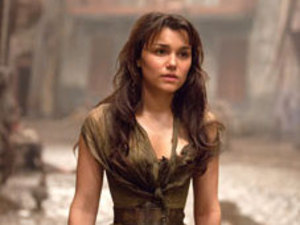
Everyone else mostly did fine: the ABC Society, the factory workers, the whores, that guy who says, "You have no friends". The convicts were mostly unintelligible though. The loud sounds of the crashing waves did not help. It was another reason I was worried about the movie in the first couple minutes.
As I said, overall, it wasn't bad. I liked it. It could have been better but it could have been worse. I think a lot of the negativity that I am finding towards the show comes from people who had very high expectations, people who think it can't live up to the stage show, or people who are expecting to be floored by the singing and these are all bad ways to go about it.
*Life Tip Of The Day: Always go into something expecting nothing. Especially movies. I saw "Django Unchained" on Christmas and all I knew about it was that Quentin Tarantino directed it. I loved it. Just saying.
And now, off to ruin the purity of my thoughts on the movie by looking at what other people think.
**UPDATE: Flixster (72% tomato rating in fact) shows a distinct difference between people who loved it and people who were notably disappointed. I'm a stand alone as a 3.5/5 rater. Oy, the internet debates that have probably been going on.
Tuesday, March 27, 2012
Some Thoughts On "The Fall" and the American Melting Pot
So I saw a delightful movie recently, Tarsem Singh's "The Fall" (no, it's nothing like "The Cell"). To those who don't know, this movie is about an injured stuntman, Roy, in 1920s Los Angeles telling epic stories to a little Romanian girl, Alexandria, in the same hospital in an effort to gain her trust so she will get him pills to commit suicide with. Oh, and the epic stories are shown in beautiful detail with unaltered on-location shooting in over 20 countries that makes for some of the best architecture/nature porn I have ever had the privilege of seeing.
 The general critic opinion of this movie is that while it is one of the most visually stunning things ever put on film, the plot itself is thin and conventional. When I heard this I was a little shocked because I honestly got a lot out of the actual plot that had little to do with the beauty of the setting (although I'm not trivializing that; I would literally become a part of the scenery if it was possible).
First of all, I developed an interpretation of this movie very early on that it held a strong theme of the "melting pot" aspect of America and American culture.
Starting with the obvious, the two main characters are an American man who is in the profession of creating movies, a visual export that can provide representations of one country to other countries, and a Romanian immigrant girl who is only about six and has clearly not been in America very long as her English is a bit off and her accent is very thick. Based on the time period, the girl seems like a representation of the wave of immigration that occurred in the early 1900s.
Alexandria's "old world" sensibilities are represented most clearly through the story Roy tells her. While he is telling the story, the visual representation of the story is shown to be a product of her mind as the characters in the story are played by people she actually knows and the setting is fluid and dreamlike with no clear location and no connection from place to place.
Like the scenery, the female character of the epic has clothes that fit in many different lands at once and are constantly changing origin. The five heroes of the story seem a bit more constricted to there lands being an African, an Indian, a Brit, an Italian, and a Spaniard (then Frenchman) but in truth, they probably aren't.
The first character Roy introduces in his epic is a slave who takes form in her mind as the kind ice delivery man who Alexandria sees every day. This assignment could have just come from the fact that he was someone she had seen recently and was fresh enough on her mind to become the first character or it could have come simply from the fact that he works providing a service which is the closest reference she had to a slave. An alternate way of dissecting it would be to note that the man is black and is represented in her mind in a traditional African fashion. While Alexandria would probably be unaware of America's history with enslaving Africans, in 1920s America black people would still be granted less rights and be treated unfairly compared to others. She could be combining the way she sees him being treated with her "old world" ideas of what a black person would traditionally dress like.
The next character is a much less ambiguous case. Roy simply calls him "The Indian" and he takes form in Alexandria's mind as an Indian man who she works with. However, as Roy is describing the Indian's back-story he uses words like "squaw" and "wigwam" which clearly show that he is referring to a Native American and not an Indian from India. While Roy is thinking of America's origins, Alexandria would probably not know much about American Indians. She sees India and she sees it by virtue of knowing an Indian immigrant.
The third character is a fantastical version of Charles Darwin but this fact is not the important detail. What is however is that he is on a quest for a rare butterfly called "Americana Exotica": Exotic America. While I probably don't need to explain the significance of this name in correlating with my topic, I would like to point out that of all the real places that make up the dream universe of Alexandria's mind, at no point is there ever an American location. They show the Statue of Liberty at one point but it is the first in France, not in Manhattan. The country of America is absent from her dream world and all the characters are actually real life Americans (whether born there or immigrant) but foreigners in her mind.
This shows strongly in the last character of Roy's epic's five man band. The character is a Spanish man represented as Roy but with the additional characteristic of a gap in his teeth like Alexandria. During the second part of his story, Alexandria asks Roy why he makes the character talk in a Spanish accent and asks that he "talk normal. Like you." Normal by Alexandria's definition is an American accent, a standard accent in a land mainly consisting of people from places with very different accents. The character's ethnicity is also fluid as Roy changes him to a French man at one point to ret-con a plot error even though he sticks with the American accent. It doesn't matter where you come from, you can be American, perhaps?
Although I mainly wanted to talk about this theme, I wanted to say a few things on the actual plot of the epic. A lot of people complained about the simple story but the epic itself is realistic as a story a man might make up to tell a little girl. While the story is, for Alexandria, a bunch of people she knows on an adventure, for Roy it is a healing process with the bad guy played by the man who he blames for ruining his life and limbs. The bad guy is the same in Roy's mind as Alexandria's as she encountered him at the hospital and knew him to be the man who Roy hated. The bad guy is also the only character based on a person who wears the same clothes he did in reality: an expensive white suit of no origin. He is where fantasy and reality meet.
This movie is apparently based off a Bulgarian film called "Yo Ho Ho" that seems to have the same themes in terms of friendship and reclaiming your life after depression, as shown through Roy and Alexandria's relationship. I have not seen it so I cannot account for whether anything else could be taken from it but I can't help but think that if there's anything that would separate these two movies, what I'm trying to prove here is it.
I very well could be reading too much into this but isn't it better that I got more out of it than less? Also, I just noticed: the director is Indian but went to college and now works in America.
Maybe it isn't so ridiculous.

First of all, I developed an interpretation of this movie very early on that it held a strong theme of the "melting pot" aspect of America and American culture.
Starting with the obvious, the two main characters are an American man who is in the profession of creating movies, a visual export that can provide representations of one country to other countries, and a Romanian immigrant girl who is only about six and has clearly not been in America very long as her English is a bit off and her accent is very thick. Based on the time period, the girl seems like a representation of the wave of immigration that occurred in the early 1900s.
Alexandria's "old world" sensibilities are represented most clearly through the story Roy tells her. While he is telling the story, the visual representation of the story is shown to be a product of her mind as the characters in the story are played by people she actually knows and the setting is fluid and dreamlike with no clear location and no connection from place to place.
Like the scenery, the female character of the epic has clothes that fit in many different lands at once and are constantly changing origin. The five heroes of the story seem a bit more constricted to there lands being an African, an Indian, a Brit, an Italian, and a Spaniard (then Frenchman) but in truth, they probably aren't.
The first character Roy introduces in his epic is a slave who takes form in her mind as the kind ice delivery man who Alexandria sees every day. This assignment could have just come from the fact that he was someone she had seen recently and was fresh enough on her mind to become the first character or it could have come simply from the fact that he works providing a service which is the closest reference she had to a slave. An alternate way of dissecting it would be to note that the man is black and is represented in her mind in a traditional African fashion. While Alexandria would probably be unaware of America's history with enslaving Africans, in 1920s America black people would still be granted less rights and be treated unfairly compared to others. She could be combining the way she sees him being treated with her "old world" ideas of what a black person would traditionally dress like.
The next character is a much less ambiguous case. Roy simply calls him "The Indian" and he takes form in Alexandria's mind as an Indian man who she works with. However, as Roy is describing the Indian's back-story he uses words like "squaw" and "wigwam" which clearly show that he is referring to a Native American and not an Indian from India. While Roy is thinking of America's origins, Alexandria would probably not know much about American Indians. She sees India and she sees it by virtue of knowing an Indian immigrant.
The third character is a fantastical version of Charles Darwin but this fact is not the important detail. What is however is that he is on a quest for a rare butterfly called "Americana Exotica": Exotic America. While I probably don't need to explain the significance of this name in correlating with my topic, I would like to point out that of all the real places that make up the dream universe of Alexandria's mind, at no point is there ever an American location. They show the Statue of Liberty at one point but it is the first in France, not in Manhattan. The country of America is absent from her dream world and all the characters are actually real life Americans (whether born there or immigrant) but foreigners in her mind.
This shows strongly in the last character of Roy's epic's five man band. The character is a Spanish man represented as Roy but with the additional characteristic of a gap in his teeth like Alexandria. During the second part of his story, Alexandria asks Roy why he makes the character talk in a Spanish accent and asks that he "talk normal. Like you." Normal by Alexandria's definition is an American accent, a standard accent in a land mainly consisting of people from places with very different accents. The character's ethnicity is also fluid as Roy changes him to a French man at one point to ret-con a plot error even though he sticks with the American accent. It doesn't matter where you come from, you can be American, perhaps?
Although I mainly wanted to talk about this theme, I wanted to say a few things on the actual plot of the epic. A lot of people complained about the simple story but the epic itself is realistic as a story a man might make up to tell a little girl. While the story is, for Alexandria, a bunch of people she knows on an adventure, for Roy it is a healing process with the bad guy played by the man who he blames for ruining his life and limbs. The bad guy is the same in Roy's mind as Alexandria's as she encountered him at the hospital and knew him to be the man who Roy hated. The bad guy is also the only character based on a person who wears the same clothes he did in reality: an expensive white suit of no origin. He is where fantasy and reality meet.
This movie is apparently based off a Bulgarian film called "Yo Ho Ho" that seems to have the same themes in terms of friendship and reclaiming your life after depression, as shown through Roy and Alexandria's relationship. I have not seen it so I cannot account for whether anything else could be taken from it but I can't help but think that if there's anything that would separate these two movies, what I'm trying to prove here is it.
I very well could be reading too much into this but isn't it better that I got more out of it than less? Also, I just noticed: the director is Indian but went to college and now works in America.
Maybe it isn't so ridiculous.
Subscribe to:
Posts (Atom)