Saturday, December 29, 2012

Some Thoughts on the "Les Miserables" Movie

So I saw the movie last night with my friend Alex and I wanted to get out my brain spew before the inevitable occurrence of talking to other people happens and I am bombarded with opinions other than my own. Right now, my brain is fairly fresh as I think the only things I know are that I am vaguely aware of the movie's rotten tomatoes rating (somewhere in the low 70%?) and I know that a lot of people on my tumblr dashboard who love the musical were very, very upset but my friends who love it seemed to think it was okay.

Confession time: I haven't actually seen the FULL stage show. I saw the shortened stage show that is actually practically the same length, the 25th anniversary concert, parts of the 10th and I know the music by heart learned through repeated listening to the original London cast recording years ago. I have also read the book and it is one of my favorites with Victor Hugo being one of my top two favorite authors as a whole (Kurt Vonnegut is the other one; in case you are trying to figure out what the hell those two authors could possibly have in common, they're both humanists). So that being said, I would say that overall, I liked it. I probably give it 3.5/5 stars which is generally the rating I used for "I liked it. It was good" with 4 being great, 4.5 being awesome, and 5 being flawless. The reason for the rating is because I found that there were things I really, really liked and things that really, really bothered me with very few things not on that strict binary.

What I loved wholeheartedly was the art direction and costumes. The sets were gorgeous and really evocative of the time period and feel of the stage show. I felt like the book was coming to life for me in a way that didn't occur when say, I watched the Liam Neeson non-musical version of "Les Mis." I absolutely love things that they included like Gavroche's elephant and the church interiors were all beautiful. As for costumes what sticks out the most is the Thenardier's three costumes changes, each very different and clearly showing both their station and their bombastic flair. From a visual standpoint alone, everything was beautiful and nothing hurt.

I also loved all the attention to detail and little callbacks. When Javert is singing "Stars", he is shown walking along the edge of a roof, a scene that is evoked again when when he is singing his suicide song and teetering on the edge of the bridge with an intent to jump. When Cosette is talking to her father in his bedroom, the silver candlesticks the bishop gave him are prominently displayed on a side table. There's also the inclusions from the book that according to my only available authority on the matter at the time (Alex) aren't in the stage show. Marius' grandfather appears and their relationship is given a brief albeit informative back story. The scene with Lamark's funeral being the start of the rebellion is included and given a bit of reasoning. Alex also told me that everything after Valjean and Marius escape from the sewers is more clearly laid out. Also, I have to mention the ending scene. As Valjean was dying, I started wondering how they were going to do the ending reprise of "Do You Hear The People Sing?" and they did it excellently with Valjean essentially entering a heaven where there is a giant barricade across Paris. While I am sometimes not happy with "showing heaven after death" scenes, this one didn't feel contrived. It also perfectly tied in the themes of hope so well with the song lyrics combined with the symbolic barrier. Hugo would have been happy with it, I think.

I was okay, perhaps leaning more towards pleased, with the way the songs were ordered and what was cut. Eponine sings "On My Own" earlier than she does in the show which actually cuts the bit where she talks to Cosette herself and this was one of the things I would have been more unhappy about had I not developed a desire to not have Amanda Seyfried sing more than she had to. Same with how they cut "Dog Eats Dog" entirely. I would have been more sad if I hadn't been okay with the fact that Sasha Baron Cohen is not a singer, but plays the role well. The one thing I actually was kind of missing was "Little People" solely because it makes Gavroche singing it when he dies collecting gunpowder feel more random than like a dark reprise which is what it actually feels like in the show. However, they shorted "Castle On A Cloud" which was good because that song is boring and I love that they moved forward "One Day More" and pushed "Do You Hear The People Sing" to the scene where they actually start the riot. In the show it has always felt unnecessary to me to have "Red and Black" and "Do You Hear The People Sing" back to back even though both songs are absolutely necessary to the show at large. There where a couple times where lines were flip-flopped and it messed up the rhyme scheme which irks me but I can deal with it, particularly because there were also times when lines were changed to be more descriptive than the previous ones so it balances out. The inclusion of the new song "Suddenly" was not offensive or anything, just unnecessary. I don't have any feelings about it.

The thing I was displeased with was the direction. I loved Tom Hooper's directing of "The King's Speech" but here it was clear that he was out of his element. To quote Alex, "Directed by Tom Hooper, guest directed by Steven Soderbergh". It was very clear that there were some things he could do and some that he could not. All the choral songs were wonderfully directed. "At The End Of The Day" had a lot of quick cuts but it really had great movement and felt natural with the song. "Turning" was a nice slow pan out of women cleaning up the blood on the streets as they sang. All the war scenes and large crowd scenes were great as was the final song of Valjean's death. The problem mainly appeared when it came to shooting solos. Almost every solo, especially every really heartfelt tear-jerking solo was shot in the same exact way: close up of the actor's face slightly to the right of the scene with negative space to the left. By "Empty Chairs at Empty Tables" I was screaming, "ENOUGH." The only solos that were well shot were Javert's which actually had life and movement and composition (there was one lovely shot in particular of Javert on the ledge in the right part of the frame and Notre Dame in the left; reference to other Hugo books?). I get that he wanted focus on the actor's reactions over all else but when the same technique is used that many times, it loses all meaning. There were also other directional decisions that were really odd. There is one quick shot of Valjean and Marius talking that has a tilted camera for absolutely no reason at all except to make the audience tilt their head in both confusion and to see the scene better. When the camera pans up on Gavroche's dead body, it looks like he's slipping out of the frame. Sometimes an actor would move and the camera would seem to be a few seconds late in catching up to them. Then there was the brief but memorable shots of extreme shaky cam when the boys are running into the cul-de-sac that made me so motion sick I had to shut my eyes for a second.

Aside from the shots themselves there was another particular directorial decision I have to address. There were a lot of actors who did the, "unable to sing properly because I am overcome by emotion" thing which was mostly effective but there were a few times when it got absolutely excessive to the point where it was a real hindrance on the actor's volume, diction, and rhythm. Actually, especially rhythm. At first I thought this was just a thing Anne Hathaway was doing which is smart because she is an actor first and not a singer but then where I realized that absolutely everyone was doing it, I decided that someone told them to do this and there were a lot of times when it should have been toned back. The scenes in particular that come to mind are when Fauntine is hallucinating Cosette, a lot of Valjean's solos, and the first half of "Empty Chairs At Empty Tables."

Now we get to the actors specifically, the quality of which works strictly on a person by person basis and occasionally even a song by song basis. Now, I am not going to get super hung up by the fact that half these people are really not Broadway voices because it really doesn't matter for most of the parts of this show and it's a movie anyway that, like I said in the previous paragraph, chose to put acting performance above traditional quality of singing. But I will call shenanigans when I see it. I'm going to try to go based on time of appearance but it might be a bit looser than that.

Hugh Jackman as Jean Valjean was fine. Just fine. I had no real expectations of him but during "What Have I Done?" I started to get sincerely worried. I felt better as time went on although his "Bring Him Home" could have been better. I think that song is really the test of a Jean Valjean. If you can nail that, you can probably nail everything else. A lot of his songs had very odd rhythm that didn't follow the music well and this was a constant annoyance. Overall, fine.

Russell Crowe gave a poor performance of Javert. He couldn't act and sing and the same time and didn't really do either anyway. The word that comes to mind is flat: flat performance and singing that literally didn't stray from about one and a half octaves. He was bland as bland could be and the part really should have been recasted.

Colm Wilkinson as the Bishop was obviously perfect although the second he started singing I was like, "Holy crap! It's two Jean Valjeans!"

Anne Hathaway as Fauntine was actually surprisingly great. I didn't have doubts about her like other people I know did but I was pleasantly surprised. She has a good voice and her performance itself was really moving. I almost started tearing up during "I Dreamed A Dream" and I never tear up from that song because it is practically a cliche at this point but her acting was just so powerful, I couldn't help it. I think she's working for that Oscar.

Isabelle Allen as Young Cosette was fine. She was only in it for a second and she sung perfectly fine.

Sasha Baron Cohen as Monsieur Thenardier was the right casting choice from an acting perspective no doubt about it. Thenardier isn't really a "singing" part so there was no real pressure for him to do particularly well there. He just had to be funny and he succeeded. The one problem I had with him was that during "Master Of The House" he adopted this weird semi-French accent that sounded more like Borat than anything and was so incongruous since everyone else has either a British-ish (usually cockney) accent or has no accent because they are singing and that usually diminishes an accent.

Helena Bonham Carter as Madame Thenardier . . . well, it makes sense from an acting perspective but goddamn if I'm not sick of hearing her try to sing. I think she somehow was even less impressive here than in "Sweeney Todd". She needs to learn how to project and her diction could use so much work. If I didn't know the lyrics, I would have no idea what she was saying during her bit in "Master Of The House" (although side note: I love the staging for her bit in that song with her flirting with the guy as she robs him).

Amanda Seyfried as Cosette was notably not good. Her acting was fine, I guess. There's not much to act in the role of Cosette really. Her vocal tone was fine too. The problem was that she missed the correct note about half the time. She was frequently sharp and it was painfully obvious. She didn't even really have any moments when it could be blamed on being overcome with emotion.

Eddie Redmayne as Marius, like Anne Hathaway, was a surprising standout. Prior to seeing the show I had heard him sing "Heart Full Of Love" and I was really worried but when I actually heard him sing other things, he was really good. I had a bit of a problem with the first half of "Empty Chairs At Empty Tables" because he sang it so softly without any real buildup so when it actually gets to the big belting moment, it came out of nowhere but I may be a bit critical because it's my favorite song. His voice also had a really interesting, unusual tone which went well with his unusual looks.

Aaron Tveit as Enjorlas was obviously fantastic. It's funny how much his voice stood out as a Broadway actor over the regular actors.

The same could be said of Daniel Huttlestone who played Gavroche and was great. No surprise that he has played the role before.

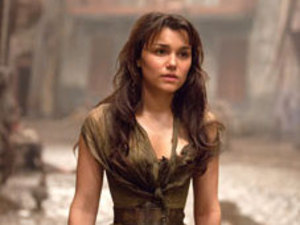
Samantha Barks as Eponine was very good but I felt like she was holding back a bit. I feel like her performance at the 25th anniversary concert had much more of a punch to it although she still got me a bit choked up during "A Little Fall Of Rain". Perhaps she was hungry. Seriously, her waist is terrifying in that dress. Give her a cheeseburger.

Everyone else mostly did fine: the ABC Society, the factory workers, the whores, that guy who says, "You have no friends". The convicts were mostly unintelligible though. The loud sounds of the crashing waves did not help. It was another reason I was worried about the movie in the first couple minutes.

As I said, overall, it wasn't bad. I liked it. It could have been better but it could have been worse. I think a lot of the negativity that I am finding towards the show comes from people who had very high expectations, people who think it can't live up to the stage show, or people who are expecting to be floored by the singing and these are all bad ways to go about it.

*Life Tip Of The Day: Always go into something expecting nothing. Especially movies. I saw "Django Unchained" on Christmas and all I knew about it was that Quentin Tarantino directed it. I loved it. Just saying.

And now, off to ruin the purity of my thoughts on the movie by looking at what other people think.

**UPDATE: Flixster (72% tomato rating in fact) shows a distinct difference between people who loved it and people who were notably disappointed. I'm a stand alone as a 3.5/5 rater. Oy, the internet debates that have probably been going on.

Saturday, December 15, 2012

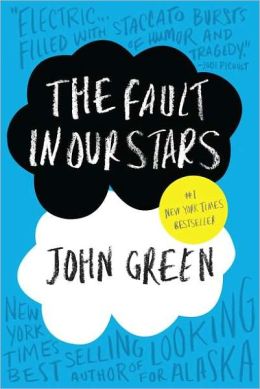
John Green Is An Amusing But Frustrating Author.

So I think I should get this out of the way first: John Green, the person, is awesome. He's hilarious and clever and incredibly quotable especially in the departments of "being a nerd" and "relationships." I have seen every episode of Crash Course: World History and a rather notable share of his vlogbrothers videos (as well as many by his brother, Hank Green). Hell, one time I even sat my mom down and made her watch his "How To Make A Baby" video and I never share anything with her. Plus, there's the fact that he's a Christian humanist which, as a secular humanist myself, fills me with joy whenever I find religious people who are also humanists.

So yeah, I think John Green, the person, is pretty awesome. I'd still never approach him on the street but I'm a colossal bag of awkward so that's more a comment on me than anything (one day ask me about all the famous people I have encountered in New York and had absolutely no balls to talk to). And as a fan of John Green, the person, I made it my mission to read his books. Yes, that noun was always plural.

So I ventured to the library and, as my usual frustration with my town's library goes, I was unable to procure Looking for Alaska, John's first young adult novel. Luckily, the day was not a failure as I did manage to find Paper Towns. The second I got home at around seven, I started reading and I was finished in the evening the next day. I thought it was really a fantastic read: very smart, likeable and interesting characters, a writing style that sounds like John Green talking, and a plot that kept me turning the pages with no effort. When I finished, I went onto goodreads.com, as I do, rated it, and read reviews. The positive reviews were mostly people talking about how awesome John Green, the writer and person, is so I ignored them. As it goes, the negative reviews were much more interesting. Most of them complained about the characters being too much like his other characters which, since this was the first book I had read by him, I didn't fully understand but it made me wonder what was in store for me the next time.

The library was kind to me and I managed to find Looking for Alaska the next time I tried. It took me a bit longer to read, maybe four days off and on, and when I finished I was conflicted. Like, "My feels!" conflicted. Yes, it's a sad book but it wasn't the sadness that pained me. What pained me was the fact that A.) I could see exactly what those reviewers were saying about the characters being too similar but B.) I HATED these characters so much in direct contrast with how I felt about the characters in Paper Towns but C.) I understood that I wasn't supposed to necessarily like them. And yet, and here's where the problem comes in: I really felt that it was the stronger book from a thematic and plot-based standpoint. The only thing I wasn't conflicted about was that the book had the funniest blow job scene I have ever read and probably will ever read and at least that cannot be taken from me (I photocopied it and read it aloud to my friends with voices; I can't do a Romanian accent at all). My hatred of the characters for being both unoriginal and unlikeable deeply conflicted with my feelings on theme and plot and as a book person myself, I eventually had to admit to myself that Alaska was far superior.

Next came Will Grayson, Will Grayson which I thought was okay but had a lot of faults, particularly in John Green's half of it, most notably those same character types appearing again and a romance that kind of distracted from what the book really seemed to want to say.

I just finished The Fault in Our Stars and I have to say I feel a little better about John Green, the author (the book, on the contrary, made me sob during my lunch break in a good way). It had a lot of the same things to complain about as before but it did feel fresher and newer than the others and for that I have hope.

If you're wondering why I haven't read An Abundance of Katherines, I have been unable to find it in the library. If you're wondering why I don't just buy it since I seem more on the plus side than the negative with John Green's books, it's because I can tell from the plot synopsis that even if it is good (which reviews don't seem to tell me), it's unlikely that I will like it more than Alaska or Stars. I like the tragic. It's how I roll.

But here's my main point: John Green can write a good novel. He has written Great novels. Alaska and Stars are novels I will read over and over and push on other people. But he has a notable problem with repeating himself in the way he writes his characters. There's having a style and then there's having a formula and John Green has developed a formula when it comes to his characters which can be a difficult thing to get past after reading more than one of his books.

It is in no way debatable that John Green can really write a smart book with an unpredictable and interesting plot. And that's why I'm so angry by the flaws.


SPOILER ALERT. YOU HAVE BEEN WARNED.


Frustration: Characters

The John Green Character Set is an easy to deconstruct machine that applies to all 3.5 books by him that I have read except The Fault in Our Stars which is slightly different.

1. First you have the protagonist who is a sixteen year old boy. He is considered kind of a nerd, awkward to varying degrees, and has a good relationship with his parents and no siblings. In spite of his awkwardness, he is often rather clever in his speech and is usually subtly stated to get good grades and be one of the "smart kids." He is interested in a girl who will change the way he looks at the world.
Variations:
* Miles of Looking for Alaska is the biggest outcast of them all, apparently having no friends before switching schools which seems to be the only risk he had taken in life until that point. He wants desperately to fit in and seems rather prominently out of the loop with modern culture.
* Quentin of Paper Towns isn't much of an outcast at all. He has a solid group of friends and seems to have a lot of acquaintances and an ex-girlfriend but he takes pride in avoiding social conventions like prom. This distaste in high school culture gets stronger as the story goes on.
* Straight!Will of Will Grayson, Will Grayson has a flat out code about preventing himself from being a part of life although his aversion to feeling feels is never given a real explanation (trying to reduce his presence do to the overwhelming presence of his BFF?). He has to learn human feelings and does by the end.
[N.B. I'm kind of convinced this character is John Green himself or, more accurately, how John Green perceived himself as a teenager.]

2. Then you have the second most important character: the girl. She is pretty (often hot), curvy, very clever and funny. She's a terrible driver and has an interest in books and/or music and often has some poem that she thinks is very important. She is also kind of unpredictable because someone screwed her up and usually kind of pretentious. Oh, and she's taken. Sorry, protagonist.
Variations:
* Alaska of Looking for Alaska is this to a T. The important difference with her versus the other girls is that it is not just that she does random things, her moods are erratic as heck and she is often moody and bitchy. She's also really bad at being faithful. These unlikeable things about her are part of what creates one of the themes of the novel. Also, Miles never really gets her (neither romantically nor understandingly).
* Margo of Paper Towns is less screwed up than Alaska but with her we never find out why; just that her parents don't know how to treat her. We never see her drive but we do know that her unpredictability is not negative and is usually on a more grand scale for amusement purposes. Quentin only sort of gets her but he definitely understands her.
* Jane of Will Grayson, Will Grayson is very toned down from the other two. She's not necessarily unpredictable and instead of a poem she has a scientific theory. Jane is kind of the others only so much more safe and nice and unlikely to do something absurd. She's kind of boring in comparison. Will gets her but, in this case, Will and her is not really the most important part of the story.

3. Then you have the best friend of the protagonist. The best friend is the yang to the protag's yin. He is outgoing and energetic and actually understands the way high school works and wants to be a part of it. He acts as an important foil to the main character to support the theme.
Variations:
* The Colonel of Looking for Alaska is pretty much Miles' guide to the school, introducing him to his crew of friends and telling him who to avoid. He acts as the foil to Miles after Alaska's death because while Miles wants to live in his fantasies of her and not truly understand who she was and why it would happen, the Colonel forces him to consider why and face the hard truths.
* Ben of Paper Towns is the foil to Quentin because while Q becomes increasingly more detached from high school society, Ben becomes more of a part of it, feeling complete by finally fitting in and dating a popular girl.
* Tiny of Will Grayson, Will Grayson is a foil of Will in that he is not afraid of who he is or getting involved in people and love but what makes him distinct from the other best friends is that Tiny actually has a more important story than the girl of the story. In fact, in one school of thought, Tiny could easily be the main character of the whole book over both Will Graysons.

4. The other, sometimes best, friend of the protagonist. Often they are the most logical minded of the three guys, pointing out when the other two are going to do something that wouldn't be good. They are also a minority in some way.
Variations:
* Takumi of Looking for Alaska is one of the main schemers of the group but his most important moment comes from the fact that while the Colonel and Miles are suffering from Alaska's death with each other, Takumi is living in his own pain with the same guilt as them and they don't find out until much later.
* Radar of Paper Towns is the intermediate between Q and Ben. He does not get swept up in their new found popularity but he doesn't alienate himself from high school society. He is also very aware of where both Ben and Q lie on this spectrum.
* Those two guys of Will Grayson, Will Grayson don't really have a role aside from padding out the cast. Also, while the other two characters I mentioned are ethnic minorities, these two are gay which, in this book, puts them in the majority but puts them in the minority in reality.

5. There is also sometimes a token other girl. She is usually friends with the main girl and is a part of the group by dating one of the guys in it. Specifically you have Lara of Looking for Alaska who is friendly with the group and then dates Miles briefly and Lacey of Paper Towns who is Margo's best friend and dates Ben. Will Grayson, Will Grayson didn't have one.

***Exception.
The Fault in Our Stars doesn't quite fall into this pattern but it does maintain elements of it.
* Hazel is the main character and she does have some things in common with her male counterparts. She is kind of awkward and separated from regular teenage life but this is because of her cancer, not really because of her personality as far as we can tell. For this reason, she also has a close relationship with her parents. She has the same elements of being clever but considering things like that she got her GED and is in college, this doesn't feel too random either.
* Augustus is her love interest and in this case that is very literal. Most of the main relationships in the other books aren't really love and the book is about the main character understanding that, but this one is a love story. Augustus also has similar elements of his female counterparts. He's hot, drives poorly, and is clever. He isn't screwed up, however, and while he is definitely pretentious in his actions (he's very concerned with the metaphorical implications of things), his interests aren't. He likes video games and novels of video games and used to play basketball before discovering that he hated it.
Hazel's interests are actually closer to pretentious than Gus'. She quotes poetry like Alaska and has a favorite book by a flamingly pretentious author. However, she also spends hours watching America's Next Top Model marathons (those can be addictive). These varied interests of the main characters makes them feel more realistic than some of the others.
* Hazel has the foil best friend of Kaitlyn but Kaitlyn's presence in the story is really minimal even if she does have some amazing quotes about how bangable Gus is.
* Issac, Augustus' best friend, actually has much more presence in the story and he is actually very similar to Hazel in the way he views the world in relation to his disease.
* The other interesting thing about this story is that we get the male perspective in the other novels and we are very aware of the girl they are interested in but we don't have any real comprehension of the girl's perspective of the guy. In this book, because Augustus is hitting on Hazel, we know his perspective on her almost immediately after we get hers on him. Hazel isn't really given any physical description aside from her oxygen tank until Gus comes in and tells her she's hot and looks like Natalie Portman.


Amusement: Structure and Plot

Although John Green's characters may have a tendency to stem from the same basic ideas, his plots and the way he structures them are entirely unique and unpredictable every time.

Take Looking for Alaska. The book is entirely structured around Alaska's death, counting not chapters but the days before and after her death. I wouldn't call her death unpredictable necessarily. There are hints pretty early on in the book that things will not end well for her and the events immediately before are rather obviously looking to it, but the idea to build the plot like that, having both halves serving different but complimentary purposes, is brilliant.

Paper Towns has perhaps an even stranger structure. It is divided into thirds with the first and last sections surrounding the events of a single day and with the middle portion reading at a more traditional pace. The first section is all about the day and night out with Margo, the middle section is all about trying to find Margo, and the last section is about the road trip taken to get to her. The significance of a single day is practically a theme by virtue of the structure.

Will Grayson, Will Grayson obviously fluctuates back and forth between straight!Will and gay!Will with scenes and characters overlapping. The plot I will address in the next section.

The Fault in Our Stars is the most traditionally structured with chapters and no sections but it is fair to say that it falls into a strange space of time for the life of the main character and that's probably why it has such conventional structure. While the book is centered around her relationship with the male character, there are a lot of aspects about it that seem to drop the time into a random space. It takes place after the point in the time that the main character was supposed to die and it ends after her boyfriend dies but on a note that is both a cliffhanger for the future of the character but fully complete from a thematic standpoint. You get the feeling she will die prematurely as she always expected but the book doesn't let it end there.


Frustration: Will Grayson, Will Grayson

Okay so maybe it's harsh to get mad about one of his books, and one that he only wrote half of, but this book had a lot of makings to be good but fell apart for me.

First of all, this book started off as the story of two guys with the same name getting over their similar but different fears of connecting with other people (romantically, mostly). A solid premise there. The interesting thing is that they also get over this fear in the same way: a large gay guy named Tiny, best friend of straight!Will and brief boyfriend of gay!Will. This is all well and good but what got really muddled about this story for me was the fact that at some point it seemed like the story of straight!Will was long over, the story of gay!Will was ending and the story was actually about Tiny the entire time. The finale was certainly about Tiny and not really either of the Wills. It seemed like gay!Will might end up with his new friend Gideon but that was pushed to the side in order to honor Tiny. I mean, technically by organizing the "honoring Tiny" demonstration and dating Tiny/coming out, gay!Will has already grown without needing a new boyfriend but the fact that both Wills seem to have their stories end so much earlier than Tiny's is just strange.

I'm also not sure what we were supposed to take away from Tiny's story. Both Wills have "people connection issues" with gay!Will having depression and being self loathing and straight!Will living his life in the shadow of Tiny but both these issues are resolved with the magic of Tiny setting up straight!Will with Jane and being honest about him through his musical and then dating gay!Will and telling him the positive things he needed to hear. However, late in the story we are introduced to the idea that Tiny, in spite of all of his happiness, feels under-appreciated and pushed aside which is resolved by straight!Will realizing how important Tiny is to him and gay!Will setting up the demonstration with some assistance from a dozen other Will Graysons.

Is the message that everyone is insecure about their relationships, even the confident ones? Hiding parts of oneself was definitely a theme and this would fit.

Somehow I have managed to talk this into making a lot more sense than it did right after I finished the book and yet, for some reason, I am still kind of underwhelmed by the book, mainly John Green's part. Aside from the fact that the most important person to the main character is his best friend instead of a girl, I felt like a lot of the standard John Green character types were present but with less uniqueness and thought than usual and that was rather upsetting.

The most positive thing I can say about John Green's half is the moment when straight!Will realizes Tiny's importance to him and he gives this speech about how much he loves him made me tear up. Even, when he's not at the top of his game, he can sure as hell provoke a response.


Amusement: Theme

If you have to single out the one thing that makes John Green books worth reading, it is quite simply the fact that he writes books that are heavy in themes that really make you think about life. Some of his themes overlap from book to book but each one has a different feel and introduces at least one fresh idea to make you think.

Looking For Alaska:
* Idolizing the dead/False vs. real remembrance
* The impact one person can have
* The mystery of death
* Suffering
* Coming of age

Paper Towns:
* Perception versus reality
* Fitting in/high school society
* The moment you cannot handle life as it is

The Fault In Out Stars:
* Heroism
* Suffering
* Living with dying
* Leaving a legacy/False vs. real remembrance
* True love
* Fate vs. crazy random happenstance


Frustmusement: Dialogue/Inner voice/References 

I have mixed feelings about this combination of things. One the one hand, a lot of the characters seem to have the same inner voice and talk similarly but this relates back to the issues with character. On the other hand, even John Green's sad books have had moments where I was rolling on the floor laughing at the things the characters say. The overall writing is great of course but there are times when the dialogue feels a bit too clever and well planned which ends up disrupting your involvement.

As for references, there are a lot of references to things that John Green loves in his books but I think this is really only clear to people who know about John Green, the person. I love that John Green sneaks things he likes into his books but I can't help but feel like the characters he writes are all Nerdfighters in some weird crossover universe.
Some things I've managed to pick out:
* Listening to the Mountain Goats, John's first, second and fourth favorite band (Paper Towns).
* Going to Amsterdam where John lived for two months (The Fault In Our Stars).
* Saying something looks like conjoined twins, one of John's fields of expertise.
* References to Schrodinger (Will Grayson, Will Grayson).
* His favorite paradox ( The Fault In Our Stars).
* Religious studies class, religion being one half of John's college major (Looking for Alaska).
* Living in Orlando/Chicago/boarding school (Looking for Alaska, Paper Towns, Will Grayson, Will Grayson).
* "This Machine Kills Fascists" is on his laptop and the Woodie Guthrie poster (Paper Towns).
* Nerdfighter Esther Earl and Hazel have the same cancer and obviously she was the basis for the story, The Fault In Our Stars. Even the fact that the author in the story wrote his book to give his daughter a better fictional life seems similar to what John was doing for Esther.
And there's probably more I can't think of.


Final Thoughts:

Read John Green. Seriously. Preferably Alaska or Stars but Paper Towns is good too.
I wouldn't write such a long entry if I didn't love.

And I may have to update this later with my thoughts on Abundance of Katherines because the shape of my Christmas present from my boyfriend indicates that he got me John's box set of books. SO EXCITED. Shh, don't tell him I know.

DFTBA, Nerdfighters.
 

***UPDATE: I read An Abundance of Katherines and I have to say that it is hands down John Green's weakest book. It unfortunately fits the character profile I made up pretty accurately with some slight variations, as there always are. The main character is a prodigy, the girl is actually fairly boring and it seems like he was trying to make her as far from Alaska as possible resulting in kind of a first draft of Margo, and the two best friends are combined into one who is the only character I found particularly likable (and this was a case where we were supposed to like the characters). There were again, really solid themes this time of Fame, identity, community, story telling and remembrance, and what matters to you defines your mattering. The big problem was actually a surprising one: the plot wasn't very good. The premise itself was kind of silly and the whole general idea of hanging out in small town America just isn't interesting to me. The silly premise also makes it hard for the plot to move forward so it just kind of clunks along to a conclusion, not really earning its themes like his other books do. It was still funny and certainly not a bad read but it was rather unnoticeable which is something you usually can't say about John Green's writing and that alone makes it kind of a disappointment.

Friday, November 16, 2012

The Art Of Fan Videos.

Fan videos, like fanfiction, are a creative way to show your love for a fandom or a part of a fandom in a unique way that will hopefully expand the experience of the original medium somehow for someone else.

As I have mentioned in other entries, I'm a fanfic writer, not a video maker, but I watch a lot of fan videos and have made a video before. It taught me a lot about what goes into making fan videos, specifically that it is a lengthy and daunting but ultimately rewarding task. And that anime's slow frame rate can make it hard to keep things interesting. That one time making a fan video was really all I needed. It's not that I don't have the vision to make fan videos; I lack technical skills. Fan videos, for me, are just better left up to people who can use Vegas or Final Cut with skill that I do not have the time or drive to develop.

So as they say: those who can't do, teach.

I will try to provide examples for everything I talk about but I should warn that: A.) A lot of great fan videos are hosted by YouTube and end up getting taken down because of a misunderstanding of copyright laws. A lot of video examples I would like to use are not available anymore and I can't be sure that ones I will use will last either and B.) My videos are likely to be heavily from a few certain fandoms (Fullmetal Alchemist, Whedon shows) that I enjoy most because those are the ones I watch. I apologize for the lack of diversity. Try to focus more on what I am trying to point out in each video than get hung up on the fandom.


Some Things to Consider When Making A Fan Video

Fan video making comes down to four basic elements: premise, audio, content, and editing.

PREMISE

Premise and audio usually go directly hand in hand. Often the premise for a video comes from hearing a song and thinking that the song perfectly encapsulates some part of a fandom and that is how the idea for a video is born. However, sometimes the initial idea for a video is not tight enough and you should really think hard about whether or not your premise works.

Premises usually come in a few basic types:

1.) Relationships.
Although I don't know if this is actually true, it would seem that the vase majority of fan videos are made in the support of a pairing, usually romantic although there are the occasional friendship based videos. The reason for this is abundantly obvious: people feel very strongly about their ships and  making a tribute to that ship is the kind of thing someone can actually devote hours of work to.
If the ship you want to make a video for is very common, it is good to have more to your idea than just, "I am going to make a general video about this ship because this song reminds me of them."
One of my favorite fan videos of all time is called "Nightlights" by EarnestHumor. The video is very obviously about the relationship between Roy and Riza in Fullmetal Alchemist and the simple but pretty song really could have been taken any way in terms of visuals. The maker has decided to make the video sort of a dual tribute both to the character's relationship and to the use of lighting in the anime itself.

2.) Style.
These videos are rare but I figured I should add this one in as a follow up to the "Nightlights" video. A good half of that video, maybe more, is not about a ship but is about a stylistic choice of the anime. These are hard to make and usually require some kind of special visual analysis from the maker to have even decided to make such a video in the first place. I honestly don't know if I have seen another video so devoted to a reoccuring image and style choice. Also, with this kind of video, the mood of the audio has a tendency to be less important and a lyric-less choice might actually be better than one that is trying to send a message.

3.) Plot or Plot Fragments.
This could mean the whole story of a movie/series or just a specific part of it. Plot based fan videos are common because they are probably one of the easiest. These are especially common in shows where there is a popular story arc that people would want to make videos about.
This one doesn't need an example because it is so self explanatory but if you really need one I would recommend "Violet Hill" by EarnestHumor which is a video that is about the Ishval War arc of Fullmetal Alchemist. This maker will appear a lot in this entry because they are one of my favorites and they still have all their videos up.

4.) Character.
These are pretty easy to find as well and talk about a character throughout the length of the medium, a specific aspect of the character's personality, or a specific development/change in the character's personality. They can also talk about multiple characters who are all linked somehow i.e. part of the same crime fighting group, evil corporation, etc.
I have a good non-Fullmetal Alchemist example but I wanted to use it for the "Content" section so have "Stand In The Rain" by KhmyhVKBII, a character study of Riza Hawkeye with a song that may as well have been written about her as the songs picked for this kind of video should be.

5.) Theme and/or Motif.
 Theme requires some reading into but most well written shows and movies have a few very clear ones. This is one of the more ambitious videos to attempt because although a song for the theme will usually come easily, clips will not. With a character, ship, or plot video you usually already know in your mind where you can find the right clips. Theme videos usually require more digging.
One fantastic example of this kind of video is "Maybe Redemption Has Stories To Tell" by Elphiyero10, a video that uses all of Joss Whedon's shows and recent movies to show a theme of redemption throughout all of them (and some smaller connections as well). A theme video within a show is a noble endeavor, the fact that this video covers four shows, a webseries, and three movies is ridiculous.

6.) Comedy.
Comedy videos are pretty much intended to not have much to do with the actual plot or characters of the original medium. The comedy almost always comes from the audio directly and the clips are put in places to match. This would be pretty much anything that uses a song like "Like A Boss" or "I'll Make A Man Out Of You". Even if it does follow some loose character or plot threads, the main goal is to make the viewer laugh instead of being true to the story.

The last video I have to post here is one of the hardest I have found to categorize but I like it nonetheless: "Heads Will Roll" by OhMyGoddess86. Based on the premise itself (a Tudors video using "Heads Will Roll" by the Yeah Yeah Yeahs) you would expect it to be a comedy but it isn't really very funny once you get over that initial laugh at the premise. It's actually more of a theme piece, capturing the mood of the show rather well in how the show would juxtapose a scene of intense sadness and violence with a scene of indulgence and pleasure. The song actually plays that idea up very well too with it's bouncy tune but conflicting lyrics. From the opening scene of violent dialogue you get the impression that this is actually going to be a serious video and it ends up making the opening music more like a dirge than a prelude to a dance song.
You can play on people's exceptions with your choices and make them view not just a show differently but also a song.

Some other things to question:
* Will I have enough footage to make this idea work? Will I need to cut the song down or can I broaden my idea to accommodate? Alternatively, is the idea too broad/doesn't fit the song?
*  Does this premise represent a fanon or a canon idea? If it is a purely fanon idea, can I sell this idea to a viewer with audio and content?
* Has this idea been done before? Sometimes an idea that seems obvious to you hasn't been thought of by anyone else or it has been done but your premise or approach is different enough from theirs that there is no reason not to do it.

AUDIO

As I said before, the audio for a video is directly related to the premise but there are a few things that could be said about using audio specifically. There are a few different kind of audio that I have seen used in fan videos but there are three main ones: Music with lyrics, Music without lyrics, and dialogue.

1.) Music with lyrics.
This is by far the most common choice because usually an idea for a fan video is sparked by listening to a song you like and thinking that the lyrics fit for a certain part of a medium. The most important thing is to make sure that the lyrics fit your premise exactly. Generally I find that the types of music chosen are of the rock genre ranging from pop rock to metal and this is likely because these songs are generally less shallow than your average pop song and also avoid the problem of aging a video greatly if you use a song that is only topically popular. Country songs get used sometimes and pop songs that are more lyrically driven come up as well but I think overall these genres are just less popular with the fan video making crowd. Rap is pretty much always a bad choice because the likelihood that the song really conveys a message relating to the show/movie is unlikely. These kinds of songs work best for a more comedic approach like in this video "Bumpy Ride Around The World" by salhar1 which is just a bunch of Hetalia characters dancing to an R&B song (but is still delightful and mesmerizing).

2.) Music without lyrics.
Mood is important with songs with lyrics but it is the WHOLE point with lyric-less songs. I am no expert on songs without lyrics but I do know that major chords= happy and minor chords=sad. Otherwise this is obviously up to you to judge what the mood of the song is and if it fits with your premise. Well done, a lyric-less song can actually be used for any of the six premises I listed above.
I already showed a video with a lyric-less song, the Whedonverse Redemption video, although I should point out that the song is "Dare You To Move" by Switchfoot which actually does have lyrics that do fit the theme. This is another interesting option. The maker intentionally chose a song that would fit but used a version without lyrics to allow for easy additions of . . .

3.) Dialogue.
There are really only two ways to use dialogue that I have seen so far. The first way is to use carefully selected dialogue from the medium in the video during moments where there aren't lyrics to support the premise. The second way is to use dialogue from a completely different medium in order to make a comedy video.
I already gave an example of a video that uses a song with no lyrics in order to add dialogue but "A Hole In The World" by visitjessiechan is an example of a video that uses a song with lyrics but has a long intro that is filled with dialogue in which to drive this plot-based fan video. The song builds up to lyrics and similarly, the content in the video builds until both the lyrics and dialogue are used.
As for the comedy alternative, have Baccano! doing The Hangover by TheBrokenComputer.

Some other things to question:
* Are there any lines in the song that don't fit what I'm making? Should I taken them out? Should I shorten the song?
* Would dialogue help or hurt my premise? Does it make more sense to use a song with lyrics or without?
* Will the type of song I chose alienate viewers? Does the song conflict with the mood of the original medium? If it does, is this done for comedy purposes?

CONTENT

Content can only come in two forms, clips and stills, so there is not a lot to say about this section.

1.) Clips.
The most important thing in putting together a video once the premise and audio are tackled is not actually the video effects that I will talk about in "editing" but simply choosing the right clips and positioning them correctly. Here are just some of the things you can do:
* Drawing parallels is a great technique to use. Show two clips side by side that relate to each other.
* A technique that you see used in the "Stand In The Rain" video shows a character's face, a flash to what they are thinking about, and then a flash back to their reaction to the thought. This tells the story without needing dialogue.
* A similar technique can be used more long term when you flow between the present and the past.
* Changing clips to the beat of the song.
* Matching clips to song lyrics that describe the clip.
* If a song has lyrics that define an indistinct "he", "she", "you", "I", or "they", the video should clearly show who these pronouns actually are. If you can't match characters to pronouns, you may need to rethink your premise or song.
A great video that has a little excess editing (just transitions and zoom) and is entirely based on well placed content is "Wesley: On My Own" by Viddwhizz. It has examples of every technique I mentioned here.

2.) Stills.
For the reference, stills refers to both pictures and words. A video made of stills is subject to everything I mentioned in the "Clips" section but still videos have one very strong disadvantage over clips: less visual interest. This is why in order to make a still video that is memorable and quality, video effects have to be used. The stills must have the appearance of movement unless your only goal is to make a slideshow.
One great video I saw accomplished this by quoting dialogue on the screen word by word to move the eye across the screen with still images around it. Unfortunately, I can't find this one so I will use another great video that uses manga panels as the stills: "Somebody's Watching Riza" by EarnestHumor (yes, again).

Some other things to question:
* Am I creating enough visual interest with my clips/stills? Are the shots too long and could benefit from being shortened?
* Could a combination of clips and stills be better than sticking to just one or the other?

EDITING

As I mentioned before, editing is not actually necessary to make a good video if you are strong in the other three elements but it is good to have some basic knowledge of the little details one can add to make your video more visually interesting.

I definitely don't know all the elements of editing but I can name a few keys ones to think about when you are making a video:

* Transitions: Fade Out, Fade In, Cross Fade
* Filters: Can change the color, add a slight pattern to the video, black and white, etc.
* Zoom and other camera movement that is not inherent in the clip
* Inserting of stills or clips into other stills or clips (as a superimposition or as an opaque image)
* Changing the lighting of the clip.
* Changing the lens.
* What I call "clip jumps": when the image shakes briefly. Also when the lighting gets brighter for a second.
 * Boarders
The list goes on and on.

I have posted videos here that have mild to moderate editing which is most common and what I prefer. The EarnestHumor videos have probably been the most edited but that is still mostly moderate editing by fan video standards. Here is an example of a heavily edited video: "Gives You Hell" by Viinurify. This video uses every technique I mentioned and probably more.

Editing really is a matter of personal preference and knowledge of editing software but you should at least know about transitions when you make a video since this an unavoidable bit of editing any video.


Hopefully I have taught you something.

Now go make some pretty.

Tuesday, November 6, 2012

On Halloween And Being A Goth At Heart

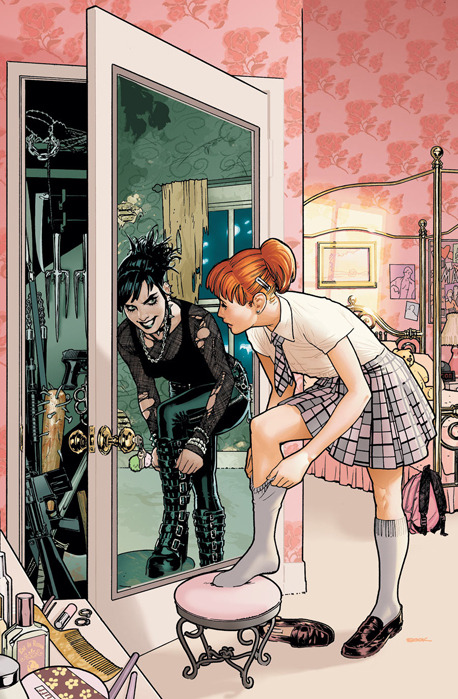
I've had a lot of people tell me that I am a Goth at heart. Pretty much all my friends have said it or something like it at some point in our friendship and when you hear something that many times from the people who you chose to have closest in your life, you end up believing it.

"Goth at heart" is probably kind of a hard thing to picture. There is a very set idea of the physical convention of Goth involving dark makeup, body mod, and black clothes, usually anachronistic, but I don't really look like this. I have dark hair and fairly light skin but it's genetic. I hardly ever wear makeup (my profile pic is a weird exception) or do anything to my fingernails aside from cutting them. I have no tattoos, I only have pierced ears, and I mostly wear a pair of 16g black, curved, spiked barbell earrings, a little Goth but I wear them to my job at a conservative bank and no one comments on them. I often wear a ring in the shape of a snake; occasionally I wear a necklace. The vast majority of my clothes are black but they are plain shirts, skirts, or just blue jeans. I even own a red shirt and a purple shirt that I wear to work. My shoes are mostly flats or boots. Although I have had a lot of people tell me that I shouldn't wear black everyday, I'm really not intimidating looking at all. To a lot of people, my tendency toward wearing black and white all the time is seen more as "artsy" than Goth or punk. Old ladies smile at me on the street at the same time that people with 0g piercings view me as someone who may listen to the same music as them.

And yet, I really am a Goth on the inside. I listen to Goth music and Goth-influenced music including lots of dark cabaret, steampunk, and the like and have been to shows where the entire audience is in black gowns. I like snakes almost as much as I like puppies. My biggest aspiration when I was eight years old was the become Wednesday Addams (and I totally had a crush on Raul Julia in the Addams Family movie). Walking down the street with my mom, I ran away from her to hop a fence to a cemetery and take pictures of the graves for an hour (she was unamused). I was squeeing the entire time I was in the London Dungeon. I read a lot of Poe in middle school. I used to dress up like a witch because I wanted to be one and for years kind of thought I was one. When I'm alone, I sing The Devil's Carnival as loud as I can. I don't know if I ever even really saw myself as Goth; this has just always been how I am and often with people I will forget that these are not things everyone can relate to.

None of my friends are Goth. One of my best friends Adam (responsible for new units of measurement) is the closest. He dresses like a male version of me and bought me Emilie Autumn's book last Christmas under the contingency that he could borrow it when I was done. Otherwise, I have similar music/musical tastes with a lot of my friends but I'm still seen as the Goth one. My nickname with my high school friends was "The Vampire." After watching Venture Bros., my boyfriend told me that he ships Dean and Triana because it is very personally important to him that the nerdy guy gets the Goth girl (he's not good at subtlety).

So knowing all this the fact that Halloween is my favorite holiday probably comes as no surprise but I realized this year that it's not just because it is a holiday devoted to many things I love. It's because for a few weeks during the year, the things I like all year round are liked by everyone. For a brief moment in time every year, I am not the only one who is gushing about how cute the cup with the spiderweb on it is. I'm not the only one who wants to string up ghost lights everywhere (just the only one who doesn't want to take them down eventually). Going somewhere dressed like a zombie or a vampire isn't weird even if it isn't yet Halloween day because the season itself lasts throughout practically the whole month of October. Horror movies are everywhere as are haunted hayrides and haunted houses so I can go somewhere other than Times Scare to get my fix. And don't forget the Halloween television specials, often the best episodes of any show.

For a few weeks every year, everyone taps into that little bit of Goth inside of themselves. In fact, most people at some point have their moment like I have Halloween. People who care about soccer get the World Cup where everyone (even Americans!) care about their sport and want to watch it with them. People who are into politics get a presidential election every four years where they can talk to anyone about politics for a few months. People who love theater get the Tony Awards every year where their medium is celebrated on basic television. Everyone gets their day where a large portion of the populace cares about what they love all year around and even if it is "un-Goth" of me to relish in normal people putting up ghost plushies around their house once a year, I don't care. That small sense of connectedness is a wonderful feeling. It's that feeling you get at any sort of nerdy convention or concert but it spans so much further.

Would it be better if people could admit that my skull decorations are cool no matter what season? Perhaps. On some level though, it is nice to have something that sets you apart from everyone else. Everyone has to have that thing that makes them unique but having that little side trip into a time when your interests are shared almost strengthens your love of the thing itself. It gives you someone to talk to about it if, like me, you generally don't have anyone to talk to about it the rest of the year. You can let your joy flow freely without worrying about annoying or confusing the people around you and it serves to remind you why you love it so much in the first place when you have someone else to share it with.

Alas, Halloween is over now and the political people are having their special night as I type. But my decorations aren't down yet and if I can get away with it, they won't come down until at least after Thanksgiving (and some will be moved into my room as a permanent residence).

The glow-in-the-dark spiderwebs would look lovely on my bookshelf.

Monday, October 29, 2012

Costuming In "Pride And Prejudice (2005)"


Let me admit something shameful first: I have never read Pride and Prejudice. I know, I know. How could I possibly have an English degree and somehow managed to never read this book? Well, as it turns out, I have a lot of strange gaps in my knowledge of British and American literature, mainly from the 1800s. Sure, I took the required "British Literature 1 & 2", the first half was from Beowulf to Dr. Faustus and the second half was mostly just poetry from Pope to Yeats. Novels were neglected. And when it came for me to chose my own courses I ended up taking things like "Fiction of the 50s" and "The Real And Unreal in Fiction and Film" (which was an English course strangely enough and really strengthened my love of analyzing film). Perhaps if I had taken "The 19th Century British Novel" things would have been different but I really didn't want to pass up the opportunity to take other more unique courses.

However, in high school when I took "Survey in British Literature" I remember the opportunity to read Pride and Prejudice coming up. Our teacher had assigned Jane Eyre but when some students saw the size of the novel, they objected that there was no way they could read it in the time allotted. She solved this problem by offering Pride and Prejudice as an alternative. I picked up both books and read the first page of each. I couldn't get through the first page of Pride and Prejudice without getting distracted so I read Jane Eyre instead. I liked it although I thought the end got a little boring after she left Rochester since the times with him were the most interesting to me but I always wondered what would have happened if I read Pride and Prejudice instead.

So a month ago I started reading Pride and Prejudice . . . and Zombies. I was amused but after about 20 pages I decided that I really should know the original, zombie-free plot in order to get a better idea of how things are being altered. The fastest way to do this was of course to watch a movie version of it and I decided on the most recent one. I had heard good things about the one with Colin Firth (my mom seemed fond of it) but the most recent one was more easily accessible.

As a movie, I really liked it. The direction was really nice (same guy who directed Atonement) and the acting was good but as usual I was particularly intrigued by the costumes. The Regency era was a strange time for women's clothing as there had been a particular interest in Grecian styles that deviated sharply from the extravagant Georgian fashions before it. The dresses were simple and often empire-waisted. Undergarments were simpler with just a chemise underneath, small stays that functioned like a modern bra, and a petticoat over all that was like a sleeveless dress to give slight shape and protect the outer dress. White, like in the Georgian era, was a popular color.

Th problem with talking about the fashions of this time period is that there is not a heck of a lot to say because they are so simple and repetitive. Even in this movie, characters were the same styles, shapes, and even dresses over and over. More so than having particularly important outfits, the characters have personal styles. Yes, there is something to occasionally be said about the importance of a particular clothing choice but I think because there are so many characters with so many different personal styles, it would be more interesting to look at a character's full wardrobe and what this says about them instead of looking at particular outfits in particular scenes.

As always, please click to enlarge the photos so you can actually see the detail.

Georgiana Darcy

Oh hi, Catherine Howard. Darcy's sister only appears for a brief moment to meet Elizabeth and she has on this simple white, half-sleeve, light fabric dress. The dress makes her look young, innocent, and delicate which, from what we are told about her character seems appropriate. She is somewhat sickly, if I recall correctly, and she was almost duped into marrying Mr. Wickham so he could gain her fortune.


Miss De Bourgh

Like Miss Darcy, we only see her briefly but she has only an outfit that is interestingly the polar opposite of Miss Darcy's. She is wearing a heavy dress with a shawl and long sleeves that is a column of black and very much like something an old widow would wear. It more closely resembles her mother's more mature clothes than the light ones of the other girls in the movie. Unlike Miss Darcy, who is kind and cheerful, Miss De Bough is quiet and sad seeming although we know factually that she is also sickly. It's interesting that Mr. Darcy was expected to marry her since she is somewhat the opposite of his sister: a similarly difficult start in life but allowing it to weigh on her instead of thinking positively. Perhaps it is thought she would be a good match for him because of how well Darcy looks after his sister.


Lady Catherine

Lady Catherine represents both a different social class and a different generation than most of the characters. Her clothes are very expensive looking and far more elaborate than the girls and Mrs. Bennet who would be her contemporary. Note that the shapes of her clothes are far more indicative of the Georgian era than of the Regency era but they lack a lot of the superfluous details. She has her own hair styled and doesn't appear to be wearing panniers, allowing her to have a skirt that is slimmer but still bigger than those of the slim Grecian dresses. It's these styles that will be carried over into the Victorian era when the slim gowns fall out of fashion until perhaps the 1930s.


Mr. Collins

Mr. Collins only has one outfit that speaks to his occupation as a preacher with its stark black and white and overly practical hat. It also shows his stuffy nature. His one outfit is not stylish like Mr. Bingley and Mr. Darcy's clothes and is very buttoned up with the high stance of the vest.


Mrs. (and Mr.) Bennet

Like Lady Catherine, Mrs. Bennet is from a different generation that causes her clothing to look more Georgian than Regency. However, her clothing is much less expensive than Lady Catherine's, even her nicest outfit in the lower right picture. The funny fluffy thing on her head in the last shot also looks like a leftover from her younger days since none of the younger girls have done much more to their heads than nicely style their hair. She also wears more patterned fabrics than anyone else which also give her a matronly and old-fashioned look.


Mary Bennet

Mary Bennet is the spinster of the Bennet girls. There, I said it. If there is one daughter who is going to end up unwed and caring for her parents as they age, you can tell it's going to be her even if you don't know who will marry who by the end. Her personality is very awkward and she clearly doesn't like to be a part of society, often lingering in the background or cloistering herself. As such, her clothing is drab and not very pretty. When at home she wears a pukey grey dress, often with an apron and her clothes for going on the town are dark and heavy. The only time we see her in something lighter is in the first picture of the second party they attend where her dress actually looks a lot like Kitty and Lydia's dresses but she doesn't look particularly comfortable in it. It's a very childish style with its poofed sleeves that look far too precious on her but fine on Kitty and Lydia.


Charlotte Lucas

Charlotte's clothes are kind of a less frumpy version of Mary's. She wears similar drab colors of greys and brown but the shapes of her clothes are not quite as depressing. She doesn't really embrace the newer empire waist styles, probably because she is considered to be an old maid at this point and probably thinks it would not be appropriate but she does have some appreciation of detail in her clothes like how the first dress has the ruffle around the neck and the second has stripe sleeves. She is definitely more comfortable in society but thinks rather lowly of herself because of her age and status. After she gets married, her clothes remain pretty much the same but perhaps even more demure, which makes sense for the wife of a preacher.


Caroline Bingley

Miss Bingley shows what the young upper class dresses like. Caroline wears all the latest fashions in rich fabrics. There's also something a little showy about the way she is dressed. She always has the shortest sleeves of anyone at a party (I don't even know if a sleeveless dress would be appropriate in this day) and even in her casual wear she has on a dark red or that slight v-cut that draws attention right to her chest. The showiness is part of her personality as she tries desperately to get Darcy's attention and makes sure to appear more rich and classy than everyone else in the room.


Kitty Bennet

Next to Mary, Kitty and Lydia have some of the most bland clothes for around the house. You get the impression, even more than with Mary, that their clothes are hand-me-downs from Jane and Elizabeth. You also get the impression that Kitty, being the second youngest, got first pick before Lydia because her clothes are slightly less shabby and cuter. It's actually kind of hard to talk about her clothes without also talking about what Lydia is wearing in the same scene since they are often dressed similar . . .


Lydia Bennet

So I will. In their "around the house" clothes, Lydia's dress looks kind of wrinkled and off-color while Kitty's is slightly nicer with the neck ruffle and the better looking but still cheap and homespun looking fabric. At the first party they go to their clothes are nearly identical yellow dresses with childish bows in the back but in the second party Kitty's dress calls back to her home dress and Lydia's is much more poofy like Mary's and immature looking.


Kitty And Liddy

I had no choice but to do a side by side comparison here. The first picture is of Kitty and Lydia in their town dresses, both shades of pale yellow and practically the same shape. Next to their oldest sisters, these outfits are very young-looking with the ruffly collars, large brimmed hats and crinkly pastel fabric. In the beginning, Kitty and Lydia are pretty much indistingusihable as people so they are appropiately dressed the same for most of the movie.
The difference comes in after Lydia gets invited to stay with a friend and Kitty doesn't which directly leads to Lydia running away with Wickham and procuring a hasty marriage. When Lydia returns home for a visit as a married woman, their clothes are now completely different. Lydia's outfit has matured immensely and also become much more expensive looking. Kitty's outfit has also matured into something that looks like a more recent hand-me-down of Jane's. It's much nicer than her other clothes but it still speaks to her status as a younger sister who still hasn't moved out. It's also clear throughout the scene that Kitty has developed some resentment towards Lydia because of how she has married first and is very cocky about it, hence they are wearing completely different colors for the first time.


Mr. Bingley

Mr. Bingley is always meant to be a lighter comparison to the often darkly dressed Mr. Darcy in a way that is actually similar to how Jane is a lighter version of the more neutrally dressed Elizabeth. Bingley is dressed to be the more traditional "handsome prince" character who has a very fairytale romance with Jane. He's even riding a white horse, damnit. He's the gregarious one so he is dressed in colors like light greys and tans and even his dark brown coat has an inviting soft and velvety look to it.


Jane Bennet

Jane is a pretty, pretty princess in light blues, pinks, and white. She never wears bold colors, the boldest she has is that blue town dress, which supports her shy nature. Her clothes are very soft and feminine contrasting her with Elizabeth who wears more sensible and sturdy things. We are supposed to see Jane as the pretty and sweet one which is why she ends up with the princely man. The pink ribbon on the dress she wears when Bingley proposes also calls back to the pink dress she wore when they first meet.


Mr. Darcy

Mr. Darcy is a sea of black and dark blue which shows his seriousness. In fact, the lighter the details on him, the more likely he is going to open up a bit. When he is writing the letter he has on a red vest of some sort while he is making remarks to Miss Bingley and expressing his opinion. He wears a blue patterned vest in moments of vulnerability with Elizabeth when he sees her in his house and when he introduces her to his sister, letting her into his world. When he comes to Elizabeth at the end he appears to have taken some dressing cues from Bingley as he has on a tan vest and cravet, doing his own version of the princely thing.


Elizabeth Bennet

And finally, Elizabeth. She loves neutrals and even when she wears a color like green, red or blue, it is a really neutral shade of the color. Elizabeth is practical and smart and so she dresses that way.  Her clothes are a lot less traditionally feminine than Jane's, she even has some menswear inspired pieces, which give her a kind of strength for the time period. She wears a lot of the same things many times but they are often changed by adding a coat, shawl, or in one case a sort of sleeveless pullover thing. You get the feeling that if Mary ever decided to not be a spinster for the rest of her life, she would start wearing Elizabeth's old clothes in the same way that Kitty looks like she has started taking Jane's. Also, a funny trend in the movie is that a lot of significant moments involving Mr. Darcy and Elizabeth involve her wearing coats: the time she walks to Bingley's house, the proposal in the rain, finding out bad things about him, and ultimately, the actual proposal.


So there's my two cents.


I won't make any promises for what I will do next. My next fashion post may be The Young Victoria since all my history movie nerd friends say it's one of the best.

Thursday, October 18, 2012

Costuming In "The Duchess (2008)"

(Written per request of Carolynmorticiaaddamsstyles on tumblr. I hope this is what she was expecting)

So, Georgian fashion.

I guess it only makes sense that I should be writing about Georgian fashion now since I last wrote about Tudors-era fashion although admittedly, my knowledge of the fashions of that era was kind of . . . nonexistent. Of course, it was only after I had finished writing those posts that I felt compelled to actually go forth and learn anything about the intricacies of the fashion of the time but I maintain that I did not actually need that knowledge prior to writing those entries. I was writing about the reasons behind the outfits and not whether or not they were historically accurate. It is inconsequential whether or not red was a popular clothing color in those times because what is important is that every time Mary Tudor wore it, it meant the same general idea was being conveyed.

This is why I am nervous about this analysis. I will admit that I already have prior knowledge of the patterns of Georgian fashion which puts me at a slight advantage here but the medium of film is so very different from the medium of television when one is talking about fashion. First of all, the form is so much shorter and must convey a lot of emotions without much subtly or time to really develop changes in character, particularly when you are dealing with a movie that is more of a biography than anything. Secondly, clothes are rarely ever reused in film because generally there is a large budget to make a short form. This makes patterns a lot harder to distinguish.

Before getting into the specific outfits I figured I would talk a bit about what makes Georgian fashion unique from say, the Tudor fashions I am now familiar with and the Victorian fashions that follow. I am going to skip the Regency fashions of the early 19th century for two reasons: it is kind of an oddity in fashion history and because I may do a post on Pride and Prejudice (2005) which would allow me to talk about the fashions more fully (and I personally am not a fan of Regency fashion, probably because it would look terrible on me).

Call me simplistic but to my eyes the most basic essence of the shape of women's clothing remains generally the same throughout all three periods: bodice that is often square-necked, sleeves that can usually get shorter as time goes on, and a large skirt that brushes the floor. I know I am reducing the differences down so far but look at it this way: how I am currently dressed as I write this article (sweats, Led Zeppelin t-shirt) would look utterly ridiculous to an Edwardian girl 100 years ago, practically alien, especially on a girl, but this is common attire now. I'm talking about roughly the 16th century, 18th century, and mid to late 19th century having the same basic idea for daily clothing that would look strange to each other but nowhere near alien.

The most prominent differences between these eras I like to break down into two categories:
1.) Foundation garments
2.) Details

So lets talk about underwear. In some way, underwear from these time periods has a lot of similarities but as the shapes change, so do the names. What we would call the corset, the girls of the early 1500s would call a "pair of bodies" which created a specific bodice shape popular at the time that I personally call "the trunk". The trunk shape generally served the purpose of making the torso more cylindrical or slightly conical and would push the breasts up as you can see to the left with my girl Mary Tudor. In terms of what we would call crinolines, the garment worn was called a farthingale. The farthingale came in two general types: the conical Spanish farthingale which is what you see on The Tudors and the great farthingale which was more of a wheel shaped deal that Queen Elizabeth I was known for (think of her huge skirts). Elizabethan fashion is a lot more complex and strange than the earlier Tudor fashions and I confess I don't know much about it. There are also the undergarments known as "undersleeves" worn under trumpet sleeves (i.e. those really long drooping sleeves) but that fashion trend faded after the middle of the 1500s.
In terms of details, I think of this as a time for interesting sleeves (fur-lined trumpet sleeves in the early 1500s and those crazy poofy sleeves as time goes on), patterned fabrics for clothes, and dresses that have a split skirt in the front so that the patterned farthingale is visible underneath and sometimes a split front that can be filled with a stomacher. In the beginning of the era, women covered their heads with English-style gable hoods or French hoods which came into fashion because of Anne Boleyn and later Catherine Howard gradually fazing out the gable hood. Also, women had these little purses or prayer books handing down the front of their skirts. Seems convenient to me.

The "corset" of the Georgian era was called "stays" and had a different effect on the body than the "pair of bodies." Stays gave the torso more of a slightly inverted cone shape and were much more comfortable than the Victorian corsets. They often had shoulder straps and flaps at the bottom in order to allow more movement and accommodate a large skirt (also breathing!). Apparently they also did wonders for posture and gave more shape to breasts than their predecessor. Instead of the farthingale, for skirt shape the Georgian women wore panniers which were essentially side hoops that made the sides of the skirt very wide but made the front and back of the skirt flat. The picture to the right is me rocking some panniers (with some kind of crappy greenish petticoat over them) at the Victoria and Albert Museum in London. They feel kind of odd but are definitely easier to sit in than a hoop skirt that I also tried on there.
For Georgian details, I always think of the Georgian period as a time for white and pastel to be really prominent colors in dresses, wigs, and make-up. Even in the architecture, lighter colors seem to dominate. Sleeves were either long or half and I always think of this as the time for frilly detail, especially around necklines and sleeves. Also, this is the time for wigs, especially the ridiculous tall ones.

The Victorian era, as you probably know, was dominated by corsets with tons of boning that were tightened like crazy to create an hourglass figure. This didn't really change until the Edwardian corsets. This was also the era of the crinoline which was a ridiculous leg cage that shaped a skirt in a round style and replaced layers of petticoats as the skirt-shaper. In the later 1800s the crinoline was replaced with a bustle which was kind of a half crinoline for just the back of the skirt, shaping it without restricting movement. Overall, if you want comfort, the Georgian era or the Edwardian era is more your place (I should write about the Edwardian era at some point; maybe if I ever start watching Downton Abbey).
It's actually kind of hard to nail down the details of Victorian dresses because there's actually quite a lot of variety in style since it is a long period. There's all kinds of detail possible, any sleeve length including off-the-shoulder sleeves, patterns, ruffles, lace, anything really. The shape is the most important detail here.

I hope any of that was interesting or enlightening. I will stop stalling now and get to trying to say something poignant about Georgiana Cavendish's clothes outside of, "Ooo, poofy!"
(You can click on the pictures to make them larger and I suggest you do to see the detail.)


The opening scene of "The Duchess" is actually a scene that drips in foreshadowing (of both her gambling issues and her future affair with Charles Grey) as much as the clothes are trying to send a message about who she is at this point in her life, an important establishing moment for a film that is about someone's life. Georgiana is organizing a betting game where the men are racehorses (I see no downside here) when she is called away to be told by her mother that she is to be married to the Duke of Devonshire a.k.a. Lord Voldemort.

When she is first introduced with her friends, she is meant to blend in somewhat. They are all wearing very similarly designed dresses in those incredibly light pastel Georgian shades that all turn into an off-white when you stop paying enough attention. While the color was common at the time, in such large amounts, it is hard not to imagine that the light color speaks to the innocence of the girls who are all unmarried at this time. Also, if you look again at Georgiana's dress, you will notice that the underskirt and bow on hers are a very light blue that allows her to stick out ever so slightly more than her companions. Blue also becomes a repeating color for her. She also is the only one not wearing a hat which allows her to look more carefree than her friends who look a bit more proper in their simple but elegant hats. She still has on a cap but we are mostly focusing on her hair when we look at her face which is actually important to note. Georgiana's hair is an ever-changing element of her wardrobe as wigs were part of the fashion at the time and in this opening scene her hair is at its most subtle and contained. She has yet to start experimenting with her look as we will see later. Her hair and the simplicity of her clothes and jewelry also show that her station is good but nothing extravagant yet.


Georgiana is married to the Duke of Devonshire and enters her new home for the first time. She is unsure but hopeful.

Her clothes and jewels have gotten significantly more expensive looking, as to be expected, but it is notable that this is her first outfit as Duchess of Devonshire. This is actually the most elaborately detailed dress that she wears which obviously distinguishes it as her wedding dress, often the most extravagant dress any woman wears whether in the Georgian period or today. Her wig is also much more mature than her hair from before as it is swept up with a smooth front and curls in the back, flowers, and an almost heart-shaped looking top that is covered in the cap like the one in the first scene. Otherwise, this dress doesn't say too much aside from all these expected things.


This scene is awkwardness incarnate but I love how scene shows the full breakdown of the Georgian undergarments: underskirt, panniers, stays, chemise, and stockings.

I can't help but see so many contrasts in this scene. The stays are black contrasted with the white chemise. The metal panniers are contrasted with the cushions on top of them. The detail on the front of the stays (a stomacher?) contrasts with the plainness of the chemise. And underneath all the grown-up foundation garments? Childish pink bows.
What am I saying? Georgiana has no idea what to expect. Is this a sweet thing or a scary one? Will it be romantic or clinical? Well, clinical. Like all unhappy arranged marriage sex.


The important of the clothing in this scene is actually in comparison. Georgiana is having her first real conversation with her mother as a married woman and they discuss her problems with her relationship with her husband. Her hair is a smooth contrast to the curls of her youth and the color of her dress compliments her mother's dress. It is practically a lighter shade of hers showing that they are now in an equal position as married women but that she is still the child in the situation. There are also little details to show their station difference like how Georgiana has on a flower choker while her mother wears a shawl, making her look more youthful and her mother more matronly.


This more somber (but beautiful) dress has a couple different meanings. First of all, it is the first dress we see that is pointed out as being one of her designs which makes one think about it even more because it is a very direct representation of the character. The shades of black and grey (or is that purple-ish grey? I have failed colorblindness tests before in spite of the fact that I never seem to identify colors particularly wrong) show either that she is trying to look professional and mature or that she is subtly expressing her inner unhappiness about her marriage. Both ideas are presented while she wears this dress actually: first she discovers an interesting in conversing with politicians and enjoys fitting into their world and then she is still wearing it when she discovers that her husband has been cheating on her. Sad or dignified? You judge.


Georgiana meets Charlotte, the Duke's illegitimate daughter, over a meal and then approaches her later to comfort her about her mother's death. We also obviously see that she is pregnant.

The string front of the bodice is very clever particularly because we don't see that she is pregnant until the end of the meal scene and when we see that she is, such a dress front makes sense. I would also say that if Georgiana has a look that represents her as a mother it would be floral prints. The print on this one is more subtle than some of the others we see but it is definitely there. The wig strongly resembles the one from the previous scene which allows for this transition from the scene that presumably represented the child's conception to this scene of her pregnant. Also, I should note that Georgiana wears a lot of fake flowers, often in her hair but sometimes on a necklace or on her dress. I don't know if it always means something but it's an interesting little quirk that pops up.


A very pregnant Georgiana attends a party with her politician friends, gambles, and goes into labor.
A floral print again for her motherhood but this is definitely a party dress with the blue which is a very social color for her and comes up at lot when she is hanging with her crew. Obviously the most interesting thing here is the fur crossed on the front and on the sleeves. It's a winter pregnancy party dress (and we clearly do see falling snow in the establishing shot)!


Georgiana spends time with her newborn daughter in a floral printed dress that is very simple for her. She is just hanging around the house, getting over her pregnancy, and caring for her daughter so no extravagance is needed. There's not much to say about this dress now but I will use it for a comparison later.


Georgiana rides with a full cart of children to Bath. Unfortunately, this is all we see of this outfit so I can't say much but check out that hat. Six years have passed so Georgiana is supposed to looked aged somehow and I think that's what the hat is doing. It's more mature than most of what we have seen her in so we are now supposed to see her as a middle aged woman (at 22 if my math is correct; damn, I'm a year older than she is).


This is a new side of Georgiana, now a big figure in society who entertains crowds of people and sets fashion trends. She has found her place in this world. This is also where she meets her friend Bess for the first time.
It doesn't take a genius to decode this. Blue is her social color and she is the center of attention with her wig plumage. Her jewelry is also some of the finest since her wedding jewels showing a kind of build up in her plethora of fine things.


Although Georgiana is playing with her children in the beginning, this scene is about her friendship with Bess which is why they are both wearing stripes. There are a bunch of contrast with the specifics of how they are accessorized that keep them from being too similar (like Georgiana's umbrella versus Bess' Asian influenced one). Similar but different. The hat feather also kind of calls back to her wig feathers from the scene where she met Bess.


Georgiana gets the Duke to let Bess stay with them while making him feel like it's his idea. We don't see much of this dress either but look how much cheerier the color is than a lot of the things she has worn. Life is good for her in this moment.


Like with the other scene, Georgiana and Bess are dressed similarly but in different colors. They both have hats with feathers, they both of dresses with the same shape and a lot of the same design, and they are both carrying those wraps. At this point one must wonder if we are supposed to be seeing them as being dressed alike to show how well they get along and how they are such good friends or are we supposed to be thinking that perhaps Bess is imitating Georgiana. Georgiana is a trend setter after all although as we see later there might actually be an even worse reason why Bess is imitating her.


Again, similar jewels and now they are in the same color although not to be outdone, Georgiana has the taller hair. Usually when Georgiana is in dark colors it's a bad thing but here the black is metallic and almost more grey looking like when she at dinner with the Whig party so it's actually positive. Aside from seeing a farce that is clearly based on Georgiana's marriage, she also encounters Charles Grey again who subtly expresses his pity for her marriage situation and we see a sign that Bess may actually be a little bitter about Georgiana's popularity which may actually support the idea that she is imitating her with a devious purpose.


Georgiana and Bess have a sleepover chat where Bess tells Georgiana that Charles Grey is in love with her and tells her that sex can be fun. Then she touches her in an impersonation of Grey. I swear that part doesn't happen at sleepovers no matter how much guys want to believe it.
This nightgown doesn't have any meaning now but oh, it will.


At the opera (I think, maybe a party), Georgiana meets Grey and tells him that she could help with his campaign. This looks like a casual summer dress to me but what this really reminds me of is the dress she wore in the opening scene when Grey was her "horse" in the footrace. This officially marks them getting involved in each others lives again. Also, a blue sash for her social interactions.


This might actually be my favorite dress of hers. Georgiana attends a rally in support of Grey. After the rally, she asks him if he thinks of her often and he confesses that he does. She walks away happily but ends up discovering the Duke is cheating on her with Bess which makes for one of her lowest points.

Georgiana has not worn curls since the opening scene and I think it's no coincidence that a return to curls correlations with her affection for Charles. He brings her back to the joy of her youth. Also, this dress is fantastic. It is very clearly what the men are wearing but in a dress form: cravat, vest, and jacket. Although because she is who she is she has to add in some kind of dead animal in both her hat, which is a collection of fur and feather, and in her matching muff which, of course, gathers the attention they are trying to attain. That gigantic hat is actually a style coined by the real Duchess of Devonshire so it was great that they added it in the movie. Aside from "dressing like a women with her political cohorts" aspect, I said dark colors are bad for her and she ends up in what will be one of the two worst moments she ends up experiencing in this film.


Like with the other scene where Georgiana met with her mother to talk about a conflict, there is an element of their outfits calling to each other without matching because they difference in age is still apparent. While the last time it was a matter of color, here the pattern of her mother's shawl is reflected in her dress. The differences separate them here, however. Georgiana does not want to take her mother's advice this time.


Have some more dark colors of turmoil as she is confronted by Bess on why she did it saying that it was for the sake of getting her children back. Georgiana is unsympathetic but watches as Bess' sons arrive at the house and the Duke shows them how to handle a hunting rifle.

My favorite thing here is how both Georgiana and Bess are wearing these neck scarfs but Bess' matronly one looks like a parody of Georgiana's cute and youthful one. It's like her ability to follow in Georgiana's footsteps is unraveling with their friendship. Their wigs are still pretty similar though so I guess not all hope is lost.


Georgiana meets Grey to unwind and he makes observations about her character that are completely accurate. She confides in him and they make out.

There's not much to say about a cloak but this is definitely a cloak of depression. It screams, "Don't look at me. I am not in the mood." It actually manages to stay up for most of them time but when she starts talking about her problems, the flower in her hair is visible like it is this little symbol of hope and understanding.


Georgiana proposes the deal that she will accept the Duke and Bess' feelings if he accepts her feelings for Grey. The Duke yells at her (although Bess thinks it's fair), chases her down, and rapes her telling her to give him a son and that he is in control.

I think here the mood is supposed to be that she is vulnerable which is actually kind of a new concept as she has always handled everything very strongly including proposing this deal. The thing is that this outfit and her hair look kind of delicate and doll like and for the first time she is really put in a position that she cannot get out of or make the most of. The lack of rights of women here is something she can't get around and although pink as a girl's color is a modern concept, it is difficult not to let your brain wander to that comparison as a modern audience.


The Whigs have their victory but Georgiana can't even stick around to enjoy it. She's just going through the motions while feeling dead inside.
She's got on her blue but apparently could only get halfway there like how she could only stay halfway through the speech before running off. Also, this is a much less powerful and masculine look than the last time she attended a rally because her strength has been stolen from her. It's Georgiana-lite.


Georgiana has a full on public meltdown as she attends a party drunk and accidentally lights her hair on fire.
This dress is the same shape as the one from the scene before tying them together but now she has abandoned her social blue entirely in favor of a color is not a far cry from the color she was wearing when she convinced the Duke to let Bess stay with them. It's the end of an era here. Also, look at how sloppy that wig is. This is a drunk wig before you even realize she's drunk. Everything's up in flames (but so are phoenixes so...).


Georgiana has finally given birth to a son and gets a check in return. She is sarcastic and the Duke says that he abhors this whole thing too. Yeah, like that helps.

Same wig as from the rape scene. That's the most important thing but also note that she is a mother again but has no floral print. This birth was a business arrangement for him and traumatizing for her.


Grey comes to Georgiana's and they make awkward small talk about the French Revolution and her birth and she tries to convey to him that she has missed him and shares his feelings.

We are in a slew of white outfits. It's the Georgian era so it's not that surprising but I don't really know why. Again, it could be the callbacks to the other two scenes involving grey or it could just be the summer. I don't have much to say on this one.


Or this one really. Again, white possibly calling back to the other scenes with Grey and the color white and youth and joy and whatnot. I like her necklace but the barrette thing looks silly. *twiddles thumbs*


Okay! Here we go! This is the only time there is an outfit repeat in this movie and damn is it important. Sure, maybe Georgiana only has one nightgown but she's the damn Duchess of Devonshire so I highly doubt it. When she first wore this nightgown, Bess introduced the idea of getting pleasure from sex to her, specifically with Charles Grey. So, here's a question for you: what is going to happen in this scene?
(It was super weird to watch this scene for me because without the silly wig Dominic Cooper resembles my boyfriend like, a lot. The voice too. Makes me kind of uncomfortable but I digress.)


Georgiana asks the Duke if she can go away to Bath (to meet Grey more).

Have a happier color!


The Duke shows up with Georgiana's mother to confront her on her affair. They are unsympathetic and Georgiana is pissed. The Duke threatens Grey's political career and her ability to see her children. She tells him to leave and they trade insults (with Georgiana winning).

This dress is so close to the one she wore when the Duke gave her the check for having a son, white with stripes, a dark sash, and a round curly wig. Like the birth of her son, the topic of their marriage is treated like a business arrangement and she is on the losing side.


Georgiana returns to her children, happy to see them but so bitter about how this came about.

Now THIS is not a happy grey like all the others before it. This also looks like a traveling dress, of course, since she has been traveling. This is also the same bodice shape that she had on during the two scenes after the Duke had raped her when she was losing herself in grief.


During dinner, Grey busts into the house asking her to run away and marry him and she says that although her feelings remain the same, she cannot abandon her children.

"Losing self in grief" bodice shape: check. Flower in her hair in the same way she had it when she and Grey first kissed: check. The rest doesn't really matter because I think that's a strong enough message. Loves him but cannot.


Georgiana and Bess go away to the country so Georgiana can have Grey's child in secret.

This is a short and hard to see scene but it has everything. The dress is in a dark color and in the "grief" shape so she's in double depression right now I guess but the underskirt has a floral print. She really cares about this child but is already in sadness because she can't be with its father and because she knows she will have to give it up.


Georgiana gives birth and has to give the child, Eliza, over to Charles Grey's parents, breaking down finally when they leave.

This floral dress calls back to the floral dress she wore with her first child and that alone shows that she really wants to keep this child. She is putting it before her own sadness.


Georgiana returns home and the Duke tells her that he wants their lives to go back to normal and that there will be a party in her honor. She asks who will be there and he says, "Everybody."

We have what is definitely a black mourning sash of which she usually wears whenever the Duke treats life like a business arrangement but the dress is different from the other two dresses that she wore in similar scenes which were both white with thin stripes. I couldn't really describe this color as anything but, "meh." Perhaps that is her present mood. She feels numb. I can't imagine her feeling anything other than numbness or sadness in this moment. The hope has been stamped out of her but she can only go on.


Georgiana attends the party for her as her reintroduction to society and sees Grey there. She tells fake stories about her fake vacation and he tells her that he's engaged and that she should meet his "niece" Eliza in a little while.

Two words: MOURNING DRESS. This may be her reintroduction into the society but for her it is actually the end.


In the final shot of Georgiana we see her with Bess and their children and learn that they all lived together until she died and Bess married the Duke and that Georgiana visited Eliza a lot in secret.

So how did Georgiana's life go? It was "meh" like the color of this dress. I can't not interpret the choice to end in a dress of this color as a way of saying that she never fully recovered and lived a kind of numb, uneventful existence after all of this. Considering she gambled her way into immense debt, this is probably true.

But alas, better to have had an interesting but sad life than to have lived an entirely dull existence, I say.

And I must say this was easier to write than I thought.

Now I really want to do the 2005 Pride and Prejudice.

Regency fashion next!